How to Winterize a Pressure Washer: Gas, Electric and Hot Water Units

Some links in this guide are affiliate links. If you buy through them we may earn a commission, at no extra cost to you. This never affects what we recommend or how we rank equipment. Read our disclosure.
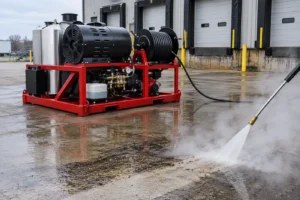
To winterize a pressure washer, treat the fuel and run the engine so the stabilizer reaches the carburetor, flush the pump with clean water, release the pressure, drain the hose, gun and wand, empty the pump, then fill it with pump saver or antifreeze. A hot water machine also needs antifreeze run through the heating coil and bypass line. If water freezes inside, it can crack the pump manifold or the coil, and Alkota, a maker of hot water machines, says winterizing takes minutes and “can save you thousands of dollars in repairs.”
Cold water gas machine: add fuel stabilizer and run 2 minutes, flush the pump with clean water for 2 minutes, shut off, squeeze the trigger to release pressure, drain the hoses, gun and wand, pull the recoil about 6 times to empty the pump, then fill the pump with pump saver through the inlet (Briggs and Stratton’s procedure). Hot water machine: also run 50/50 antifreeze through the float tank, pump and coil until it comes out of the nozzle, and work the trigger to fill the bypass line (Alkota’s procedure). If you cannot winterize, keep the machine in a heated space.
Why winterizing matters
Water expands by about 9% when it freezes. Inside a pressure washer that expansion has nowhere to go, so a single hard freeze can crack a pump manifold, split an unloader body, burst a heating coil or loosen hose fittings. Pump and coil repairs are among the most expensive fixes on a pressure washer, so a few minutes of winterizing is cheap insurance.
You need to winterize any machine that will sit where the temperature can drop below 32°F, such as an unheated garage, a trailer or a truck. If the machine stays in a heated shop all winter, draining it and treating the fuel is usually enough. Alkota’s advice is simple: if you cannot finish winterizing, keep the machine in a heated space until you can.
What you need
| Item | Cold water gas | Electric | Hot water |
|---|---|---|---|
| Fuel stabilizer | Yes | No | Yes, for the engine and burner fuel if you leave fuel in |
| Clean water supply and bucket | Yes | Yes | Yes |
| Pump saver or antifreeze | Pump saver (4 oz bottle) or RV antifreeze | Pump saver, as the manual allows | About 1 gallon of antifreeze plus a 5 gallon container to catch it |
| Antifreeze tester | Optional | Optional | Recommended (Alkota) |
| Rags, eye protection | Yes | Yes | Yes |
Check your owner’s manual first. Makers differ on whether they want pump saver, RV antifreeze or a 50/50 automotive antifreeze mix, and on whether an electric pump may be turned over without water.
How to winterize a cold water gas pressure washer
This follows Briggs and Stratton’s winterizing procedure, which matches most small gas machines.
- Treat the fuel. Briggs and Stratton says gasoline goes stale in about 30 days, and ethanol blends can cause rust, corrosion and varnish in the fuel system. Add fuel stabilizer to fresh fuel, then run the engine for 2 minutes so treated fuel reaches the carburetor. STA-BIL’s label dose is 1 ounce per 2.5 gallons of gas.
- Flush the pump. If your machine has a detergent injection tube, put it in a pail of clean water and run on low pressure for 2 minutes to rinse soap out of the system.
- Shut down and release the pressure. Turn off the engine and the water supply, point the gun in a safe direction and squeeze the trigger until the pressure is gone. Then engage the trigger lock.
- Drain the hoses and accessories. Once the unit cools, disconnect the high pressure and garden hoses and drain the hose, gun and wand. Hang the hose in loops so it drains completely.
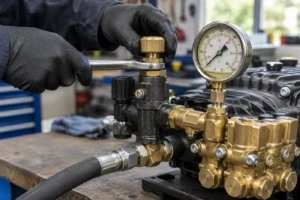
- Empty the pump. Pull the recoil handle about 6 times to push the remaining water out of the pump.
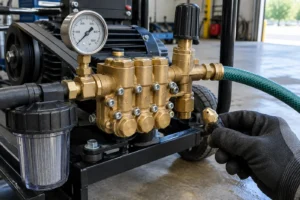
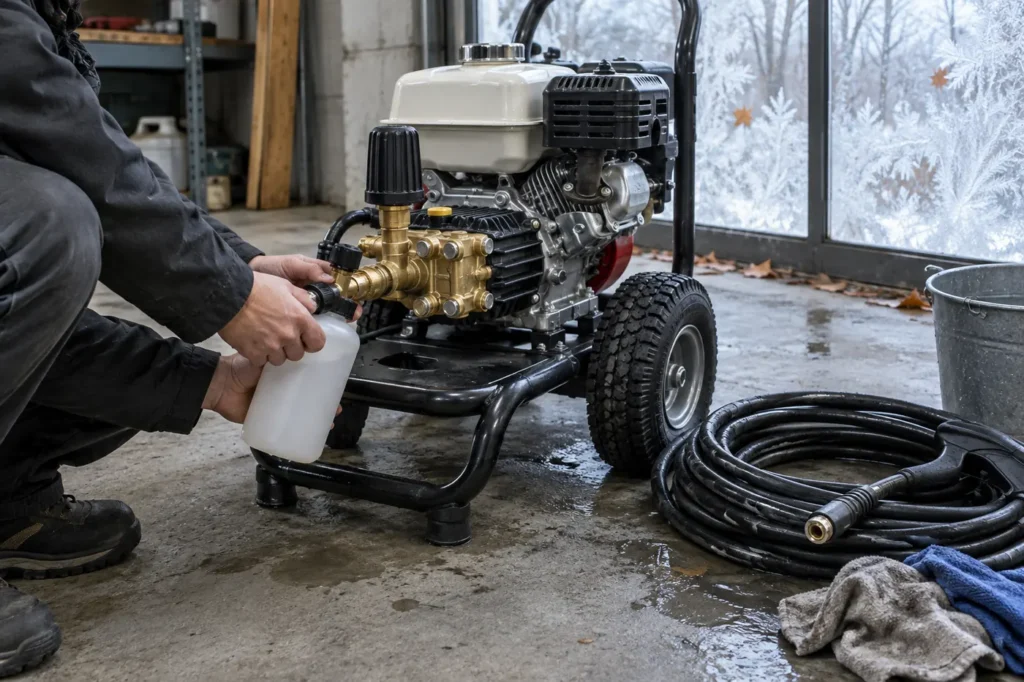
- Fill the pump with pump saver. Attach the pump saver bottle to the water inlet, using a short length of garden hose if needed, and squeeze it in. Briggs and Stratton says this helps prevent rust and freeze damage and keeps the pistons and seals from drying out. Pull the recoil twice to spread it.
- Store it clean and dry. Wipe the machine down and store it in a dry place, away from dirt and moisture.
Mi-T-M’s video instructions use the same approach: drain the hose, gun and wand, pull the recoil a couple of times, then add pump saver or RV antifreeze directly into the water inlet.
How to winterize an electric pressure washer
Electric machines have no fuel to treat and no recoil to pull, so the main job is getting water out of the pump:
- Unplug the machine and turn off the water.
- Squeeze the trigger to release pressure, then disconnect and drain the hose, gun and wand.
- Tip the machine so water drains out of the inlet and outlet.
- Add pump saver through the inlet if your manual allows it. Many manuals say not to run the pump without water, so do not switch the motor on to spread it unless the manual tells you to.
- Store it indoors. Most homeowner electric units are small enough to keep in the house or a heated room, which removes the freeze risk entirely.
How to winterize a hot water pressure washer
Hot water machines hold far more water than cold units, because the heating coil is a long length of steel pipe. A frozen coil is an expensive repair, so these machines need antifreeze through the whole system. Alkota’s procedure:
- Drain the float tank with a pump or by bailing it out.
- Fill the float tank with antifreeze. Alkota uses a 50/50 automotive blend.
- Run the machine, pointing the wand into a bucket, until you see antifreeze coming out of the nozzle. That protects the pump’s wetted metal surfaces, packings and plungers, and the coil. We would leave the burner switched off for this run; there is no reason to heat the antifreeze.
- Work the trigger. Quickly open and shut the trigger several times to push antifreeze into the bypass line.
- Leave it in or blow it out. You can leave the antifreeze in the machine until spring, or blow it out into a container.
Hotsy’s guide adds draining the water from the coil first, by disconnecting the inlet and outlet hoses, then running antifreeze through the coil until it exits the discharge. A Hotsy dealer’s instructions add a further step for extra protection: after the antifreeze run, disconnect the pressure hose and remove the coil drain plug.
While the machine is out of service, Alkota suggests the rest of the off-season work: change the engine oil on gas units, check and change the pump oil, check the fuel filters (gas hot water units have two, one for the engine and one for the burner), and drain the fuel or add stabilizer. If the burner gave trouble last season, see our guide to a hot water pressure washer burner not firing.
RV antifreeze or automotive antifreeze?
Both are used. Alkota’s procedure for hot water machines uses a 50/50 automotive blend, while pump saver products and many smaller machines use antifreeze made for RV and marine plumbing, which is propylene glycol and far less toxic. Whichever you use:
- Catch it. Run antifreeze into a bucket, never onto the ground or into a storm drain.
- Reuse it. Alkota suggests draining it into a sealed container in spring and reusing it next winter.
- Check its strength. Water left in the system dilutes antifreeze, so Alkota recommends an antifreeze tester to make sure it is still strong enough.
- Store it safely, away from children and pets. Automotive antifreeze is poisonous and tastes sweet.
- Use RV antifreeze as labeled. Some RV antifreeze is a concentrate that must be diluted; check the label.
Don’t forget the accessories
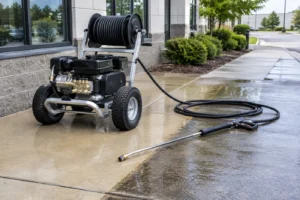
- Hoses: drain fully and store coiled indoors. A frozen hose can split at the fittings.
- Gun and wand: hold the gun upside down and squeeze the trigger to drain it.
- Surface cleaners: spin the bar by hand to drain water from the swivel and nozzles.
- Detergent tanks and lines: rinse soap out so it does not dry and clog the lines.
- Inlet filter: clean the screen before storage so it is ready in spring.
Winterizing supplies

Briggs and Stratton 6039 pump saver, 4 oz
Antifreeze and lubricant that attaches to the pump inlet. The listing says it works with most pressure washer brands.
Check price on Amazon
STA-BIL storage fuel stabilizer, 16 oz
Label dose is 1 oz per 2.5 gallons of gas; run the engine afterward to treat the whole fuel system.
Check price on Amazon
RecPro propylene glycol RV antifreeze concentrate, 32 oz
Concentrate, mixed 1 to 3 to make one gallon. Check your manual allows RV antifreeze.
Check price on AmazonAs an Amazon Associate we earn from qualifying purchases. Prices and availability change, so check the current price on Amazon.
Starting up again in spring
- If you left antifreeze in the machine, connect the water supply and run it with the wand pointed into a container until clear water comes out. Keep the antifreeze for next year.
- Check the engine oil and pump oil, and replace the oil if you did not change it in the fall.
- Inspect the hoses, O-rings and quick connects for cracks before you pressurize the system.
- Start on low pressure and look for leaks around the pump and fittings.
If pressure is weak after storage, work through our guide to a pressure washer losing pressure; if it pulses, see pressure washer surging or pulsing.
What if it already froze?
Do not start it. Move the machine somewhere warm and let it thaw completely, then inspect the pump manifold, unloader and fittings for cracks and the coil for leaks. Connect water and look for drips before you run it, and run at low pressure first. A cracked manifold or pump usually means a new pump; our guide to pressure washer pump replacement covers the signs, cost and swap.
Frequently asked questions
Do pressure washers have to be winterized?
Yes, if they will be stored anywhere that can drop below freezing. Water left in the pump, coil or hoses expands as it freezes and can crack them. A machine kept in a heated space all winter only needs draining and fuel treatment.
Can I put antifreeze in my pressure washer?
Yes. Makers use pump saver, RV antifreeze or, for hot water machines, a 50/50 automotive antifreeze blend. Check your manual for which it allows, catch the antifreeze in a bucket rather than spraying it on the ground, and store it away from children and pets.
How do I winterize a pressure washer without antifreeze?
Drain it as completely as possible: release the pressure, drain the hoses, gun and wand, and pull the recoil several times to push water out of the pump. Then store it in a heated space. Without antifreeze, draining alone leaves some risk if the machine sits in freezing temperatures.
How do I winterize an electric pressure washer?
Unplug it, release the pressure, drain the hoses, gun and wand, tip the unit to drain the pump, and add pump saver through the inlet if the manual allows. Many manuals say not to run the pump dry, so do not switch it on to spread the pump saver unless told to. Store it indoors.
What temperature is too cold for a pressure washer?
Water freezes at 32°F, so any storage below that needs winterizing. Washing below freezing also turns rinse water into ice on the surface you are cleaning, which is a slip hazard.
Bottom line: treat the fuel, flush and drain, then protect the pump with pump saver or antifreeze. Hot water machines also need antifreeze through the coil and bypass line. If you cannot do it today, keep the machine somewhere heated until you can.