Floor Scrubber Pad vs Brush: Which to Use on Your Floor

Some links in this guide are affiliate links. If you buy through them we may earn a commission, at no extra cost to you. This never affects what we recommend or how we rank equipment. Read our disclosure.
The floor scrubber pad vs brush choice comes down to the floor’s surface. Use a pad on smooth, flat, finished floors such as VCT, sheet vinyl, terrazzo and polished concrete, where it cleans evenly and can also polish. Use a brush on grout lines, textured tile, rough or uneven concrete, rubber and safety flooring, where a flat pad skips the low spots and tears. Pads cost less up front; brushes last longer.
Pad: smooth, flat floors with a finish or seal, such as VCT, sheet vinyl, terrazzo and polished or epoxy-coated concrete, for daily scrubbing and light polishing. Brush: tile with grout, textured or anti-slip floors, rubber, and bare or rough concrete. Soft nylon brushes suit delicate floors, polypropylene is the all-round standard, and grit brushes are for heavy buildup on concrete. Cylindrical scrubbers use brushes only; pads need a disc machine with a pad driver.
How pads and brushes work on a floor scrubber
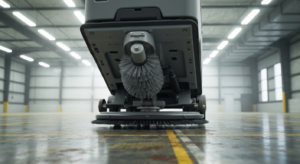
On a disc scrubber, the machine turns a round brush, or a pad driver that holds a floor pad, flat against the floor. Tennant says disc brushes run at 250 to 300 RPM, and that disc machines are the ones able to take pad drivers for maintaining finished floors. Their down pressure also lets them remove thick buildup.
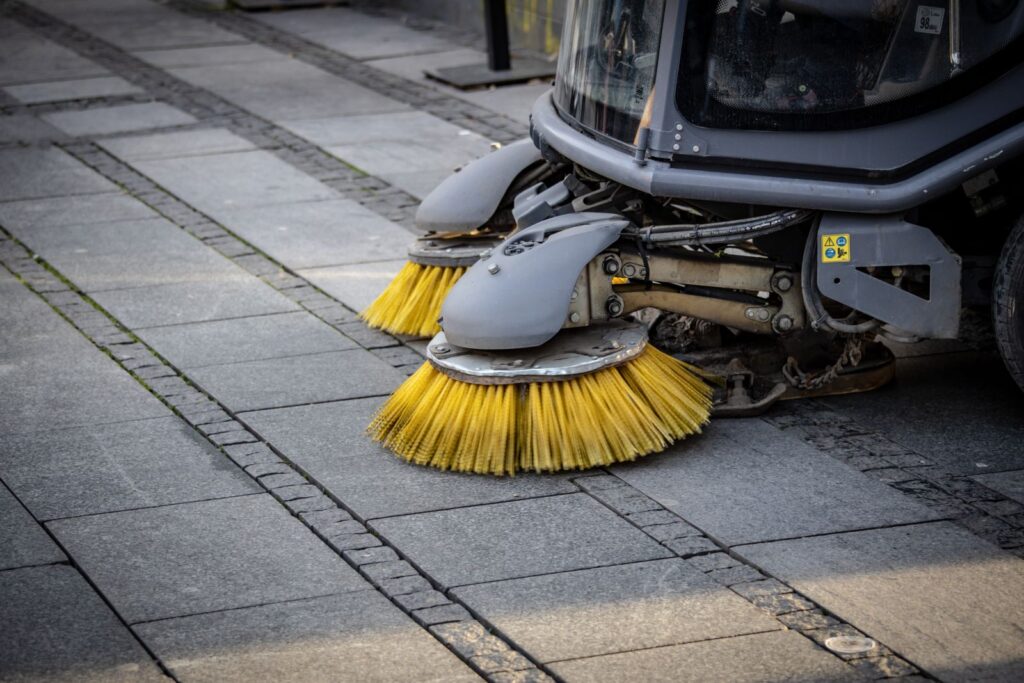
Cylindrical scrubbers use a pair of roller brushes turning in opposite directions at 600 to 800 RPM. Tennant says they sweep and scrub at the same time and can clean grout lines, but they do not take pads. So the first question is which deck your machine has: only a disc machine gives you the choice.
Floor scrubber pad vs brush for each floor type
| Floor | Pad or brush | Notes |
|---|---|---|
| VCT and sheet vinyl | Pad, or soft nylon brush | Hillyard recommends soft materials on vinyl to prevent scratching |
| Polished or epoxy-coated concrete | Pad or soft brush | Hillyard advises softer brushes or pad drivers to avoid scratching |
| Terrazzo | Pad | Hillyard lists terrazzo among the smooth floors pads suit |
| Bare warehouse concrete | Polypropylene brush, or grit brush for heavy soil | Hillyard suggests stiffer brushes and silicon carbide grit for heavy traffic |
| Glazed ceramic and porcelain tile with grout | Medium brush | Hillyard says it scrubs grout without damaging the finish |
| Matte or lightly textured tile | Pad often enough | Hillyard says pads often suffice here |
| Epoxy non-slip floors | Soft or medium brush | Too hard a brush can wear down the non-slip texture |
| Rubber gym and play floors | Soft nylon brush | Hillyard says brushes suit textured rubber better than pads |
| Natural stone, studded safety floors | Brush, ideally cylindrical | Tennant lists these for cylindrical brushes |
Advantages of floor scrubber pads
- Lower upfront cost. Hillyard calls pads more budget-friendly at the start, which suits a tight maintenance budget.
- A pad for every job. The color tells you the aggressiveness, from white polishing pads to black stripping pads. Hillyard lists white for polishing, red for light scrubbing, blue for everyday cleaning, green for heavy scrubbing, and brown and black for stripping. Our floor buffer pad color chart compares the brands.
- Even contact on flat floors. A pad cleans the whole surface on smooth floors, and a light pad can leave a polished look on a finished floor.
The drawbacks: Hillyard says pads have a shorter life and can quickly wear out or tear on uneven or rough surfaces, and they may not reach deep grout lines or clean highly textured floors well.
Advantages of floor scrubber brushes
- Longer life. Hillyard says brushes last longer, especially on rough surfaces like concrete, so they often cost less over time despite a higher price.
- They reach low spots. Bristles get into grout lines and texture that a flat pad rides over.
- Less waste. Fewer replacements means less packaging, storage and waste, as Hillyard points out.
- A stiffness for each job. Tennant’s brush guide lists nylon and polypropylene for light scrubbing and polishing, polyester and polypropylene for medium scrubbing, heavy-duty polypropylene, heavy-duty nylon and abrasive bristles for heavy scrubbing, and abrasive or super abrasive bristles for buildup removal and stripping.
The drawbacks: a higher initial cost, and you may need more than one brush if your building has several floor types. A brush that is too stiff can also scratch finished floors or wear down non-slip textures.
Which brush bristle to choose
| Bristle | Best for | Avoid on |
|---|---|---|
| Nylon | Light scrubbing, vinyl, rubber, finished floors | Heavy buildup on rough concrete |
| Polypropylene | General daily scrubbing; standard on many scrubbers | Delicate polished finishes if too stiff |
| Polyester | Medium scrubbing | Very soft or easily scratched floors |
| Abrasive grit (silicon carbide) | Heavy soil and buildup on concrete, stripping | Finished, polished or coated floors |
Hillyard says polypropylene brushes, commonly fitted as standard, are versatile for light to medium cleaning and can clean small crevices, while grit brushes “are particularly effective on surfaces with heavy buildup.” Tennant also says its OEM brushes are designed for its machines’ down pressure, speed and water flow, so check the machine maker’s brush list before buying a look-alike.
How to switch between a pad and a brush
- Check the size. Pads and brushes are sized to the machine’s deck. A 20 inch disc machine takes a 20 inch class brush or pad driver; check the part number in the manual.
- Fit a pad driver for pads. The pad hooks onto the driver’s face. Center it so the machine runs smoothly.
- Test a small area first. Hillyard advises a small, inconspicuous test spot whenever you try a new brush or pad, and adjusting the scrubber’s pressure and speed settings to match.
- Start with the least aggressive option that removes the soil, and step up only if needed.
When to replace pads and brushes
- Disc brushes: Tennant says many have a wear indicator built in; change the brush when the bristles reach it.
- Cylindrical brushes: Tennant says to replace them when the bristles are worn down to about 1 cm.
- Any brush: if cleaning takes longer or needs more passes than before, Tennant says that is a sign it needs replacing.
- Pads: replace them when they are torn, worn thin or clogged with soil that no longer rinses out.
Cleaning brushes after every use, and removing anything wrapped around them, makes them last longer, Tennant notes. If a brush or pad driver stops turning, see our guide to a floor scrubber brush not spinning; if the floor is left with marks, see floor scrubber leaving streaks. For bare concrete, our guide to how to clean a warehouse floor covers the full process.
Pads and brushes we would buy (20 inch disc machines)
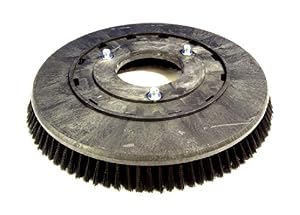
Tennant 20 inch nylon scrub brush (1016810)
Soft nylon for finished floors and rubber. Fits Tennant T300 class machines; check your part number.
Check price on Amazon
20 inch Pad-Lok pad driver with riser and NP-9200 plate
Lets a disc machine run floor pads. Confirm the clutch plate fits your machine.
Check price on Amazon
3M Buffer Floor Pad 5100, red, 20 inch, case of 5
Light daily scrubbing on finished floors.
Check price on AmazonAs an Amazon Associate we earn from qualifying purchases. Prices and availability change, so check the current price on Amazon.
Common questions
Should I use a pad or a brush on my floor scrubber?
Use a pad on smooth, flat, finished floors such as VCT, vinyl, terrazzo and polished concrete. Use a brush on grout, textured or anti-slip floors, rubber and rough concrete.
Is a brush or pad better for tile floors?
For glazed ceramic or porcelain tile with grout lines, a medium brush, because it scrubs the grout without damaging the finish, as Hillyard advises. For matte or lightly textured tile, a pad is often enough.
What brush do you use on concrete floors?
A polypropylene brush for daily scrubbing, and a grit brush with silicon carbide for heavy buildup. On polished or epoxy-coated concrete, use a softer brush or a pad to avoid scratching.
Do brushes last longer than pads?
Yes. Hillyard says brushes have a longer lifespan, especially on rough surfaces, while pads can wear out or tear quickly on uneven floors.
Can a cylindrical scrubber use pads?
No. Pad drivers fit disc scrubbers. Cylindrical machines use roller brushes, which Tennant says can sweep and scrub at once and clean grout lines.
What color pad for scrubbing floors?
Red for light scrubbing, blue for everyday cleaning and green for heavy scrubbing, according to Hillyard’s chart. Black and brown are for stripping finish, not routine scrubbing.
Bottom line: run pads on smooth, finished floors and brushes on grout, texture, rubber and rough concrete, start with the least aggressive option, and replace either one when cleaning takes more passes than it used to.