Floor Scrubber Making Loud Noise: What Each Sound Means


A floor scrubber making loud noise is telling you something, and the specific sound tells you which part is failing. A vacuum motor screaming is a completely different problem from a brush deck grinding, and the fix costs a hundredth as much.
Most people bring me a machine and say “it is making a noise.” The first thing I ask is: what kind of noise, and when? Because the answer to that narrows it down before I have taken a single panel off.
Match the Sound to the System
Work out which of these you have. It is the single most useful thing you can do.
- High-pitched whine or screaming that rises and falls with the vacuum switch. Vacuum motor.
- Grinding or rumbling that only happens when the brush is turning. Brush deck: bearing, or something jammed.
- Squealing that goes away after a minute. Belt slipping, usually worst when cold or wet.
- Rattling or vibration that changes with speed. Something is loose.
- Clicking or buzzing when you engage the solution flow. That is a solenoid valve, and it is supposed to click. Not a fault.
- Gurgling or sucking-air sound from the vacuum. Not a mechanical fault at all: it is an air leak in the vacuum path.
Notice how different these are. Lumping them together as “a noise” throws away the most useful information you have.
1. Vacuum Motor Screaming or Whining
The vacuum motor is the noisiest thing on a scrubber even when healthy. They run at very high RPM and they are loud by design. The question is whether the noise has changed.
What a failing vacuum motor sounds like:
- A rising scream, higher than normal. Usually bearings. Once bearings start, they get worse, and eventually the motor seizes.
- A grinding or rough note underneath the normal whine. Also bearings, further along.
- The motor is much louder than it used to be but nothing else has changed. Worn carbon brushes can do this, and they are a cheap consumable, not a new motor.
What is not the motor: If the vacuum sounds like it is sucking air, straining, or the note is higher because it is running with no load, then you have an air leak, not a motor fault. The motor is fine. It is screaming because it is spinning against nothing. Check the recovery tank lid seal, the drain hose cap, and the vacuum hose. This is covered in detail in floor scrubber not picking up water.
That distinction matters a great deal. A vacuum motor is one of the more expensive parts on the machine. A lid seal is not.
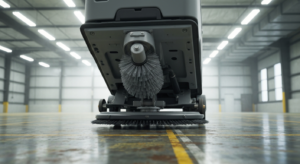
2. Grinding or Rumbling From the Brush Deck
If the noise only appears when the brush is turning, the problem is in the scrub deck.
Power the machine off, remove the key, raise the deck, and get underneath.
Two things to check:
Something is wrapped around the brush hub. String, mop strands, plastic banding, wire, or hair. This winds tighter with every rotation and eventually starts contacting the housing, which grinds. Cut it away rather than pulling it, because it has usually worked its way into a seal.
Spin the brush by hand. It should turn freely with light, even resistance. If it feels notchy, gritty, or tight, the bearing is failing. A failing bearing is not an emergency today but it will be soon, and when it seizes it can take the motor with it.
If the brush will not turn at all, that is a different fault, covered in floor scrubber brush not spinning.
3. Squealing That Fades After a Minute
Classic belt symptom. A belt that is glazed, loose, or wet will slip against the pulley, and slipping makes noise.
Two tells confirm it:
- It is worst on start-up and improves as the machine warms. The belt is grabbing better once it heats.
- It is worst when the deck is under load, for example on heavy soil or with high brush pressure.
A slipping belt is also stealing power from your brush, so you will get worse cleaning as well as noise. Look for a glazed, shiny surface on the belt, and check the tension.
If you smell hot rubber alongside the squeal, the belt is slipping badly. Stop and deal with it before it fails completely.
4. Rattling and Vibration
Almost always something loose, and almost always cheap.
Work through the obvious ones first:
- The recovery tank lid. Not latched properly, and it drums.
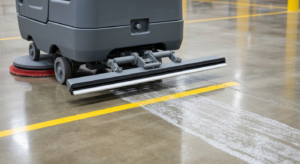
- The squeegee assembly. These bolt on with a few fasteners that vibrate loose over months.
- Panels and covers. Same problem.
- Debris in the recovery tank. A bolt, a bottle cap, or a stone rattling around inside.
- The brush is worn unevenly. A brush with bristles worn down on one side will bounce the deck, and the whole machine shakes.
A vibration that gets worse with speed is usually a wheel, a bearing, or an unbalanced brush.
Tighten the obvious things before you assume anything expensive has failed. It costs nothing and it is very often the answer.
5. Noises That Are Not Faults
Some noises are the machine working correctly, and chasing them wastes time.
- A click when you engage solution flow. That is the solenoid valve opening. It is supposed to do that. Silence would be the problem, not the click.
- A brief clunk when the deck lowers. Normal on most machines.
- Vacuum note changing as the recovery tank fills. Normal. The airflow changes as the tank fills up.
- A loud vacuum motor in general. They are loud. The question is whether it has changed, not whether it is loud.
If you are new to the machine, the useful reference point is what it sounded like when it was working properly. Change is the signal, not absolute volume.
Safety Before You Investigate
You need the machine off before you go looking for the source of a noise.
Power off. Key out. Then look.
Do not put your hands anywhere near a spinning brush to feel for a noise, and do not reach into a deck with the machine live. A commercial scrub deck has enough torque to take a finger, and it will not stop because something is in the way.
This is the scenario OSHA’s lockout/tagout standard exists for: servicing a machine where an unexpected start-up causes injury. Chasing a noise counts as servicing. The key comes out and stays out.
If you genuinely need the machine running to locate a sound, look, do not touch, and keep your hands and clothing clear.
How To Narrow It Down Fast
Run these tests in order. Each one isolates a system.
- Vacuum on, brush off. Noise present? It is the vacuum motor or an air leak.
- Brush on, vacuum off. Noise present? It is the brush deck: bearing, jam, or belt.
- Both off, machine driving. Noise present? It is a wheel, a drive motor, or something loose.
- Everything off, push it by hand. Noise present? It is purely mechanical: a wheel or a caster.
Four tests, two minutes, and you have isolated the system before you have opened anything.
What To Do Next
- Vacuum screaming with poor pickup? Air leak, not motor. Check the lid seal and hoses first.
- Grinding only when the brush turns? Look under the deck for a jam, then spin the brush by hand to check the bearing.
- Squealing that fades? Belt.
- Rattling? Tighten the squeegee, the lid, and the panels.
- Bearing noise anywhere? It will not fix itself, and a seized bearing usually destroys the motor it is attached to. Deal with it while it is still just a noise.
The one rule worth remembering: a noise that has appeared recently and is getting worse is a bearing until proven otherwise, and bearings do not recover. The cost of acting early is a bearing. The cost of ignoring it is a motor.