Hot vs Cold Water Pressure Washer: Is Hot Water Worth the Cost?

Some links in this guide are affiliate links. If you buy through them we may earn a commission, at no extra cost to you. This never affects what we recommend or how we rank equipment. Read our disclosure.
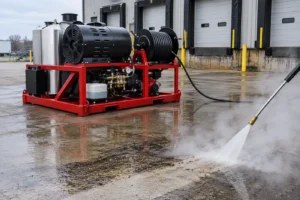
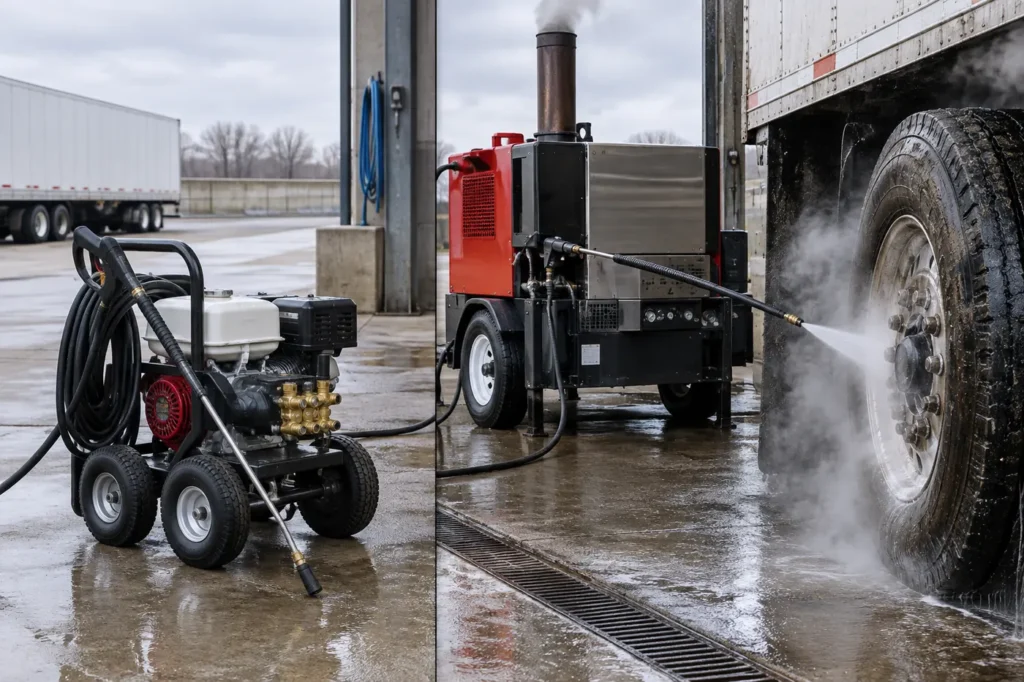
Hot vs cold water pressure washer: hot water is worth it when your work is mostly grease, oil, food residue or other soils that soften with heat, because it cleans those faster with less chemical. For dirt, mud, mildew, paint prep and house washing, a cold water machine does the same job at a fraction of the price. A hot water unit costs roughly two and a half to five times as much to buy, burns fuel every hour it fires, weighs several times more, and needs yearly burner service, so the labor it saves has to pay for all of that.
Buy hot water if you clean grease, oil or food soils every week, such as fleet, restaurant, food plant or equipment yard work. Stick with cold water for buildings, concrete, decks and general dirt. In November 2026, a 4 GPM cold water contractor unit cost about $1,100 to $2,000 and a comparable hot water unit about $5,000 or more, and a burner like the one on the BE HW4013HG burns about 2.2 gallons of fuel per hour of firing.
Why hot water cleans grease better
Grease, oil and animal fats get softer and thinner as they warm up. Hot water loosens them so the spray can rinse them away, where cold water mostly pushes them around. Detergents also work faster at higher temperature, so you often need less chemical and less dwell time. On dirt, mud and mildew, heat adds little, because those soils do not melt.
Hot vs cold water at a glance
| Cold water | Hot water | |
|---|---|---|
| Best for | Dirt, mud, mildew, paint prep, house and building washing | Grease, oil, food residue, fleet and equipment, sanitation |
| Typical 4 GPM price (Nov 2026) | About $1,100 (direct drive) to $2,000 (belt drive) | About $5,000 to $5,700 for portable gas units |
| Weight | Around 130 to 160 lb | Around 570 to 600 lb |
| Running cost | Engine fuel | Engine fuel plus burner fuel |
| Maintenance | Pump and engine | Pump, engine, burner, fuel filter, coil |
| Portability | One or two people can load it | Usually needs a trailer or skid mount |
The price and weight figures come from the machines in our guides to the best commercial pressure washers and the best hot water pressure washers.
What does the burner cost to run?
Burner fuel is the cost people forget. BE lists the burner on its HW4013HG at about 2.21 gallons of fuel per hour. With US diesel at about $6.35 a gallon (the EIA weekly average in late October 2026), that is about $14 an hour if the burner fired the whole time.
In practice the burner cycles off when you release the trigger and when the water reaches the thermostat setting, so real use is lower. As a rough planning number, budget somewhere between half and three quarters of full-fire consumption on a typical job, about $7 to $10 per hour of washing at that fuel price. Off-road diesel or kerosene prices, your thermostat setting and how long you hold the trigger all change the number.
When does hot water pay for itself?
The extra purchase cost of a hot water unit is usually $3,000 to $4,500 over a comparable cold water machine. It pays back through labor and chemical saved. Here is a worked example. The numbers are assumptions to show the method, not measurements, so put in your own.
| Item | Cold water | Hot water |
|---|---|---|
| Time to degrease a fleet of trucks (example) | 4.0 hours | 2.5 hours |
| Crew of 2 at $25 per hour each | $200 | $125 |
| Degreaser used (example) | $30 | $15 |
| Burner fuel at about $9 per hour | $0 | About $23 |
| Cost of the job | $230 | About $163 |
In this example, hot water saves about $67 per job. With a $3,500 price difference, it pays for itself in about 52 jobs, roughly one year at one job a week. If heat only saves you a few minutes per job, it may never pay back. Track how long your greasy jobs take before you buy.
When cold water is the right choice
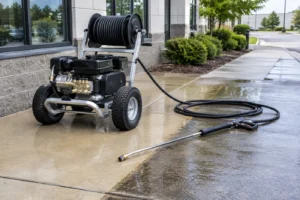
- House washing, siding, roofs and decks, where low pressure and the right chemical do most of the work.
- Concrete and flatwork with dirt, algae or mildew.
- Paint prep and graffiti on surfaces that heat could damage.
- Jobs where you carry the machine by hand, up stairs or in a pickup.
- Seasonal or occasional use, where the burner would sit and the fuel would go stale.
When hot water is the right choice
- Fleet washing: trucks, buses, trailers and heavy equipment with road grime and oil.
- Restaurants, food plants and dumpster pads with grease and food residue.
- Farm and agricultural equipment, barns and processing areas.
- Manufacturing and shop floors with oil and cutting fluids.
- Gum removal and jobs where heat helps sanitize.
For baked-on grease and kitchen hoods, a wet steam unit like the NorthStar 157310 (up to 250°F) goes a step further.
Can you run hot water through a cold water pressure washer?
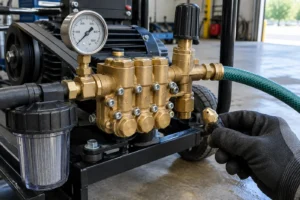
Usually not. Most cold water pumps are built for cold inlet water, and feeding them hot water from a tap or boiler can damage the seals. Some commercial pumps accept warm inlet water up to a stated limit, so check the pump’s spec sheet. A hot water machine heats the water after the pump for exactly this reason.
One of each on Amazon

Simpson Aluminum Series ALH4240
4,200 PSI, 4.0 GPM, Honda GX390 and a CAT triplex pump on an aluminum frame.
Check price on Amazon
Simpson King Brute KB65133
4,000 PSI, 4.0 GPM, Honda GX390, General triplex pump and a diesel burner with a 5 gal burner tank.
Check price on AmazonAs an Amazon Associate we earn from qualifying purchases. Prices and availability change, so check the current price on Amazon.
Hidden costs of hot water machines
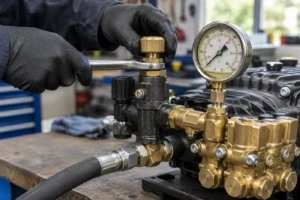
- Burner service: fuel filters, fuel nozzles and electrode adjustment, usually once a year on busy machines. See our guide to a burner that will not fire.
- Scale: in hard water areas, the coil scales up and needs descaling or a softening system.
- Freeze protection: a frozen coil can split, which is an expensive repair.
- Transport: a 570 to 600 lb machine usually needs a trailer or skid mount and a way to secure it.
- Ventilation: burners give off exhaust, so indoor use needs the ventilation the manual calls for.
Frequently asked questions
Are hot water pressure washers worth it?
Yes, if you clean grease, oil or food soils regularly. Hot water cuts cleaning time and chemical use on those soils. For dirt, mildew and building washing, a cold water machine does the job for far less money.
Does hot water clean better than cold?
On grease and oil, yes, because heat softens them so they rinse away. On dirt, mud and mildew, heat makes little difference, and the right chemical and enough flow matter more.
How much more does a hot water pressure washer cost?
In November 2026, portable 4 GPM hot water units were listed from about $5,000, compared with about $1,100 to $2,000 for comparable cold water machines. They also cost more to run because the burner burns fuel.
How much fuel does a pressure washer burner use?
It depends on the burner size. BE lists about 2.21 gallons per hour for the burner on its HW4013HG at full fire. Real use is lower because the burner cycles off when you release the trigger or the water reaches the set temperature.
Can I use a hot water pressure washer with cold water only?
Yes. You can run most hot water machines with the burner off as a cold water washer. You still carry the extra weight and cost, so it only makes sense if you need heat on some jobs.
Bottom line: buy hot water if grease, oil or food soils are a big part of your weekly work and you can measure the labor it saves. For everything else, a good cold water machine and the right chemical are cheaper, lighter and simpler to own.