How to Use a Carpet Extractor: Step-by-Step for Commercial Carpet

Some links in this guide are affiliate links. If you buy through them we may earn a commission, at no extra cost to you. This never affects what we recommend or how we rank equipment. Read our disclosure.
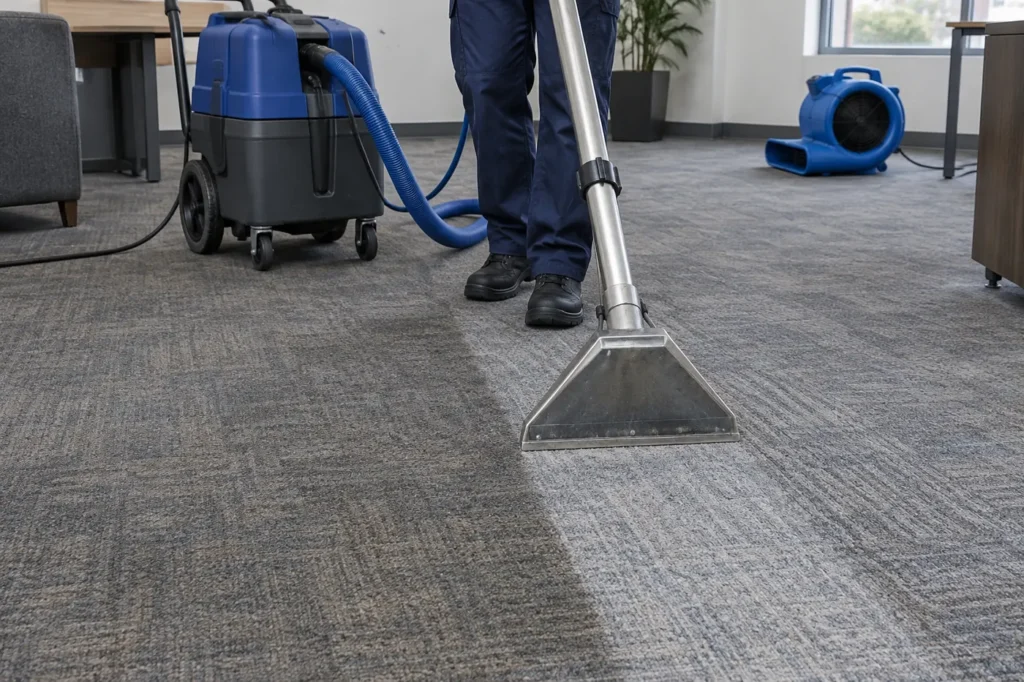
To use a carpet extractor, move the furniture and vacuum thoroughly, pre-spray traffic lanes and stains and let the solution dwell, fill the solution tank with the right detergent at the label’s dilution and warm or hot water, then clean in slow, overlapping passes: spray on one stroke, then go over the same strip again without spraying to pull out the water. Finish with extra dry passes, set out air movers, and keep people off until the carpet is dry. Sunbelt Rentals and SweepScrub, both of which rent and sell extractors, describe the same core steps.
Vacuum first, pre-spray and let it dwell (SweepScrub suggests 5 to 15 minutes for stain pre-treatment), use a low-foam extraction detergent at the label’s dilution, and use warm or hot water if the machine is not heated. Make slow passes, overlapping each by a few inches, spraying on one stroke and extracting without spray on the next. Add a defoamer to the recovery tank if foam builds up. Dry with fans or air movers, and keep traffic off until the carpet is dry. Sunbelt says most facilities need extraction once or twice a year; SweepScrub suggests every 1 to 3 months for high-traffic areas.
Before you start
| Item | Why |
|---|---|
| Commercial vacuum | Removes dry soil first; extraction turns loose dirt into mud |
| Pre-spray or traffic lane cleaner and a pump sprayer | Loosens soil in heavy-traffic lanes before extraction |
| Low-foam extraction detergent | Goes in the solution tank; high-foam cleaners flood the recovery tank |
| Defoamer | Stops foam reaching the vacuum motor |
| Spotter and a soft brush | For set-in stains |
| Air movers or fans | Cut drying time |
| Wet floor signs | Damp carpet edges onto hard floors are slippery |
Check the carpet maker’s care guide before you start. Wool and some natural fibers need wool-safe, pH-appropriate cleaners, and some carpets are not suited to hot water extraction at all. Test any chemical on a hidden area first.
Step 1: Clear the room and vacuum
Move all movable furniture out, then vacuum thoroughly, as SweepScrub advises. Vacuuming is the step people rush, and it matters most: dry soil that stays in the carpet turns to mud when wet and takes far longer to extract. If you cannot move heavy furniture, put plastic tabs or foam blocks under the legs after cleaning so wet carpet does not stain from wood or metal.
Step 2: Pre-spray and treat stains
- Mist traffic lanes and soiled areas with a pre-spray or traffic lane cleaner at the label’s dilution. Sunbelt says to let it sit briefly so it can start loosening the build-up, but not to let it dry.
- For set-in stains, apply a spotter, work it in gently with a soft brush, and wait. SweepScrub suggests 5 to 15 minutes.
- Do not scrub hard. Aggressive brushing distorts the pile and fuzzes the fibers.
Step 3: Fill the machine
- Mix the extraction detergent at the label’s dilution. More is not better; excess detergent leaves sticky residue that attracts dirt, so carpets resoil faster.
- Use warm or hot water if the machine is not heated. SweepScrub notes that heat significantly increases the solution’s cleaning power. Do not exceed the machine’s and the detergent’s temperature limits.
- Add defoamer to the recovery tank if the manual allows it, especially on carpet that was cleaned with shampoo before.
- Prime the pump and check the spray pattern on a towel before you start. If it will not spray, see our guide to a carpet extractor not spraying.
Step 4: Extract in slow, overlapping passes
- Start at the far corner and work toward the door, so you never walk on cleaned carpet.
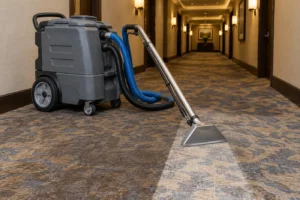
- Wet pass: pull the wand or push the machine slowly while spraying. Most box extractors with a floor wand spray on the backward stroke toward you; follow your machine’s technique.
- Dry pass: go back over the same strip without spraying, so the vacuum pulls out as much water as possible.
- Overlap each strip by a few inches, as SweepScrub recommends, so there are no missed lines.
- Add extra dry passes on heavily soiled or very wet areas. The more water you pull out, the faster the carpet dries and the less chance of wicking, where stains rise back up as it dries.
- Watch the recovery tank. Empty it before it is full, and if it fills with foam, add defoamer.
Step 5: Rinse if needed
On heavily soiled carpet, or where too much detergent was used before, a final pass with clean water or a carpet rinse removes residue so the carpet stays clean longer. Many pros use an acidic rinse to neutralize alkaline cleaners; follow the rinse product’s label.
Step 6: Dry the carpet
SweepScrub says drying time depends on temperature, humidity and airflow, and suggests running the air conditioning, placing fans or opening windows. Air movers aimed across the carpet surface dry it far faster than a ceiling fan. Groom the pile in one direction with a carpet rake so it dries evenly. Keep traffic off until it is dry, and lay down protective film on walkways that must stay open.
Extraction equipment and supplies

Sandia 80-2100 Sniper, 12 gal, 100 PSI
Dual 2-stage vacuum motors; a heated version is also available.
Check price on Amazon
Chemspec Formula 90 BioSolv carpet detergent, 6 lb
Powder for in-tank use after pre-spraying traffic lanes. Dilute as the label says.
Check price on Amazon
XPOWER P-230AT air mover, 925 CFM
Small centrifugal air mover for speeding up carpet drying.
Check price on AmazonAs an Amazon Associate we earn from qualifying purchases. Prices and availability change, so check the current price on Amazon.
How often to extract commercial carpet
| Area | How often (SweepScrub’s guide) |
|---|---|
| High traffic: entrances, hallways | Every 1 to 3 months |
| Medium traffic: offices, lounges | Every 3 to 6 months |
| Low traffic: storage, rarely used offices | Every 6 to 12 months |
Sunbelt says once or twice a year is enough for most facilities, so the right schedule depends on traffic, soil and how the carpet looks. Daily vacuuming and walk-off mats at entrances stretch the time between extractions. Our best commercial upright vacuums guide covers the daily side.
Common mistakes
- Skipping the vacuum.
- Too much detergent, which leaves residue and makes carpets resoil fast.
- Over-wetting. Too many wet passes and too few dry passes soak the backing, which slows drying and can cause odors, wicking and shrinkage.
- Moving too fast. Slow passes clean and extract better.
- Letting people walk on damp carpet.
Choosing a machine? See our guides to the best commercial carpet extractors and carpet extractor vs carpet cleaner.
Frequently asked questions
How do you properly use a carpet extractor?
Vacuum first, pre-spray traffic lanes and stains, fill the machine with low-foam detergent at the label’s dilution and warm water, then make slow, overlapping passes, spraying on one stroke and extracting without spray on the return. Finish with extra dry passes and dry the carpet with air movers.
How many passes should I do with a carpet extractor?
Usually one wet pass followed by one or more dry passes over each strip. Heavily soiled areas may need a second wet pass, but always finish with dry passes to pull out as much water as possible.
Should you vacuum before using a carpet extractor?
Yes. Dry soil left in the carpet turns to mud when wet and is much harder to extract. Vacuum thoroughly first.
Is an extractor better than a carpet cleaner?
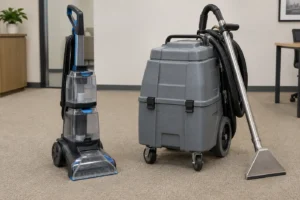
For commercial use, yes. Extractors have stronger pumps and vacuum motors, larger tanks and often heaters, so they clean deeper and leave carpet drier. See our carpet extractor vs carpet cleaner guide.
How long does carpet take to dry after extraction?
It depends on how much water was pulled out, the temperature, humidity and airflow. Extra dry passes and air movers shorten it a lot; keep traffic off until it is fully dry.
Bottom line: vacuum, pre-spray, use the right detergent at the right dilution, make slow overlapping passes with plenty of dry passes, and dry the carpet fast with moving air.