Floor Scrubber Maintenance Checklist: Daily, Weekly and Monthly

Some links in this guide are affiliate links. If you buy through them we may earn a commission, at no extra cost to you. This never affects what we recommend or how we rank equipment. Read our disclosure.
- Empty and rinse the recovery tank after every use.
- Check brushes, pads, filters, hoses, and squeegee blades for debris or wear.
- Use only manufacturer-approved cleaning solutions.
- Base deeper cleaning frequency on workload and the equipment manual.
A floor scrubber maintenance checklist comes down to three habits: empty and rinse the machine after every shift, clean the filters, hoses and squeegee properly once a week, and follow the operating-hour service chart in your manual for everything else. Most scrubber breakdowns we write about start as a skipped five-minute job.
Clean a floor scrubber after every use: drain and rinse the recovery tank, clear the debris tray and float, wipe and inspect the squeegee, remove the pad or brush, then charge the batteries. Once a week clean the vacuum filter, solution filter and hoses. Follow the manual’s hour-based chart for motors and drive parts.
How often should a floor scrubber be cleaned?
After every use. The recovery tank holds dirty water, soil and cleaning chemical, and left overnight it starts to smell, coats the tank walls and can clog the float shut-off. That single habit prevents more service calls than anything else on this list.
On top of the daily routine, plan a deeper weekly clean of the filters, hoses and squeegee assembly, and a monthly inspection of wear parts. Heavy users, such as a warehouse running the machine on every shift, should treat the weekly jobs as twice-weekly jobs.
The checklist at a glance
| When | Task | Why it matters |
|---|---|---|
| After every shift | Drain and rinse the recovery tank, clean the debris tray | Stops odor, residue and float clogs |
| After every shift | Wipe the squeegee blades and check the edges | Worn or dirty blades leave streaks and water |
| After every shift | Remove the pad or brush and rinse it | A pad left on the driver gets flat spots |
| After every shift | Charge the batteries fully | Partial charging shortens battery life |
| After charging | Check water in flooded lead-acid batteries | Low electrolyte damages the plates |
| Weekly | Clean the vacuum motor filter and float screen | A blocked filter is a top cause of poor pickup |
| Weekly | Flush the solution filter and check the solution hose | Blockages stop the solution from dispensing |
| Weekly | Inspect the recovery and squeegee hoses for clogs and cracks | Air leaks kill suction |
| Weekly | Clean battery tops and check terminals for corrosion | Corrosion causes charging faults |
| Monthly | Check brush and pad wear, skirts, wheels and casters | Uneven wear hurts cleaning results |
| Monthly | Rotate or replace squeegee blades | Each blade has more than one usable edge on most models |
| Per manual hours | Motors, belts, drive and electrical checks | Follow the maker’s service chart |
What should you do after every shift?
- Drain the recovery tank into an approved drain, then rinse it with clean water. Lift out and empty the debris tray or basket, and rinse the float or shut-off screen so it moves freely.
- Drain the solution tank if your manual tells you to. Many manuals recommend not leaving mixed solution in the machine overnight, because chemical residue can build up in the valves and lines.
- Clean the squeegee. Wipe both blades, pull out hair and string, and run a finger along the rear blade edge. A rounded or nicked edge is the usual reason a scrubber starts leaving streaks.
- Remove the pad or brush and rinse it. A pad left pressed against the floor overnight develops a flat spot.
- Wipe the machine down and look for drips or fresh damage. Never hose down the control panel, motors or battery compartment.
- Put it on charge in a ventilated area, and leave the recovery tank lid open to dry if the design allows it.
What should you clean every week?
The weekly jobs are the ones that quietly reduce performance until the machine “suddenly” stops working.
- Vacuum filter and float screen. Dirt that gets past the float ends up here. When this filter loads up, suction drops and the machine starts not picking up water.
- Solution filter and lines. Flush the in-line solution filter. A partly blocked filter is one of the first things we check when a scrubber’s solution is not dispensing.
- Hoses. Check the recovery and squeegee hoses for clogs, kinks and cracks. Even a small split lets air in and weakens pickup.
- Brush deck and skirts. Scrape off built-up soil and check the splash skirts for tears.
- Battery tops and cables. Wipe away spilled electrolyte and look for white or green corrosion on the terminals.
What should you check every month?
- Brushes and pads: replace them when the bristles are short or the pad no longer cleans evenly. Check that the pad driver is not worn.
- Squeegee blades: most rear blades can be flipped or rotated to a fresh edge before they need replacing. Our squeegee blade replacement guide shows the steps.
- Wheels, casters and bumpers: look for flat spots and debris wrapped around axles.
- Noises: a new grinding, squealing or rattling sound is worth tracking down early. See what each scrubber noise means.
Anything beyond this, such as motor carbon brushes, belts, the drive system and electrical checks, belongs to the operating-hour service chart in your manual. Use the hour meter rather than the calendar, because a machine used on two shifts wears twice as fast.
How do you look after floor scrubber batteries?
Batteries are the most expensive part most owners replace, and care is different by battery type.
| Battery type | Charging | Watering | Common mistake |
|---|---|---|---|
| Flooded lead-acid | Charge fully after every use | Top up with distilled water after charging, to the level in the manual | Adding water before charging, which can make it overflow |
| Sealed AGM or gel | Charge fully after every use | No watering | Using a charger profile meant for flooded batteries |
| Lithium-ion | Opportunity charging is usually fine | No watering | Ignoring the maker’s storage temperature limits |
If the charger shows a fault or the run time keeps getting shorter, start with our guide to a floor scrubber battery not charging.
Do you have to sweep before using a floor scrubber?
Yes, for anything more than light dust. A scrubber is built to wash and pick up liquid, not to collect large debris. Grit, zip ties and shrink wrap get caught in the squeegee and tear the blade edges, and they can block the recovery hose. Sweep or dust mop first, or use a combination sweeper-scrubber on very dirty floors. Our step-by-step guide on how to use a floor scrubber covers the full routine.
What happens if you skip maintenance?
The symptoms usually show up in this order: a smell from the recovery tank, then weaker suction and water left behind, then streaks, then a solution or brush fault. The good news is that the first fixes are almost always cleaning jobs, not parts. If your machine is already showing one of these problems, these guides cover the causes in the order they usually turn out to be the culprit:
- Floor scrubber not picking up water
- Floor scrubber leaving streaks
- Solution not dispensing
- Brush not spinning
- Battery not charging
Supplies for this checklist

Detco Scrubbles low-foam auto scrubber cleaner, 1 gal
Concentrate made for automatic scrubbers. Follow the dilution on the label.
Check price on Amazon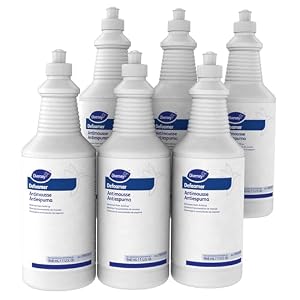
Diversey defoamer for auto scrubbers and extractors
Foam can trip the float and cut suction. A small dose in the recovery tank stops it.
Check price on Amazon
Battery hydrometer tester, 2 pack
Reads the specific gravity of each cell to find a weak cell. Not for sealed AGM, gel or lithium batteries.
Check price on AmazonAs an Amazon Associate we earn from qualifying purchases. Prices and availability change, so check the current price on Amazon.
Frequently asked questions
Should I leave water in the recovery tank overnight?
No. Drain and rinse it after every use and leave the lid open to dry if your machine allows it. Dirty water left overnight causes odors and residue and can clog the float shut-off.
Can I use any detergent in a floor scrubber?
No. Use a low-foam solution approved for automatic scrubbers at the dilution on the label. High-foam cleaners can get pulled into the vacuum motor and damage it.
How often should squeegee blades be replaced?
Replace them when every usable edge is worn, torn or rounded. Most rear blades can be flipped or rotated at least once first, so check the edges monthly and rotate before you replace.
When should I water flooded lead-acid batteries?
After a full charge, not before. Add distilled water only to the level shown in your manual. Watering before charging can make the electrolyte overflow during the charge.
Does daily maintenance replace professional servicing?
No. The daily and weekly jobs keep the machine clean and catch wear early, but the hour-based service chart in the manual, covering motors, belts and electrical parts, still needs to be followed.
Bottom line: five minutes after every shift and a proper weekly clean of the filters, hoses and squeegee prevent most of the problems that take a scrubber out of service. Keep the manual’s hour chart for the rest.

[…] floor scrubber maintenance checklist covers the full daily, weekly and monthly […]