Best Industrial Vacuums (2026): Wet/Dry, HEPA and Dust Extractor Picks

Some links in this guide are affiliate links. If you buy through them we may earn a commission, at no extra cost to you. This never affects what we recommend or how we rank equipment. Read our disclosure.
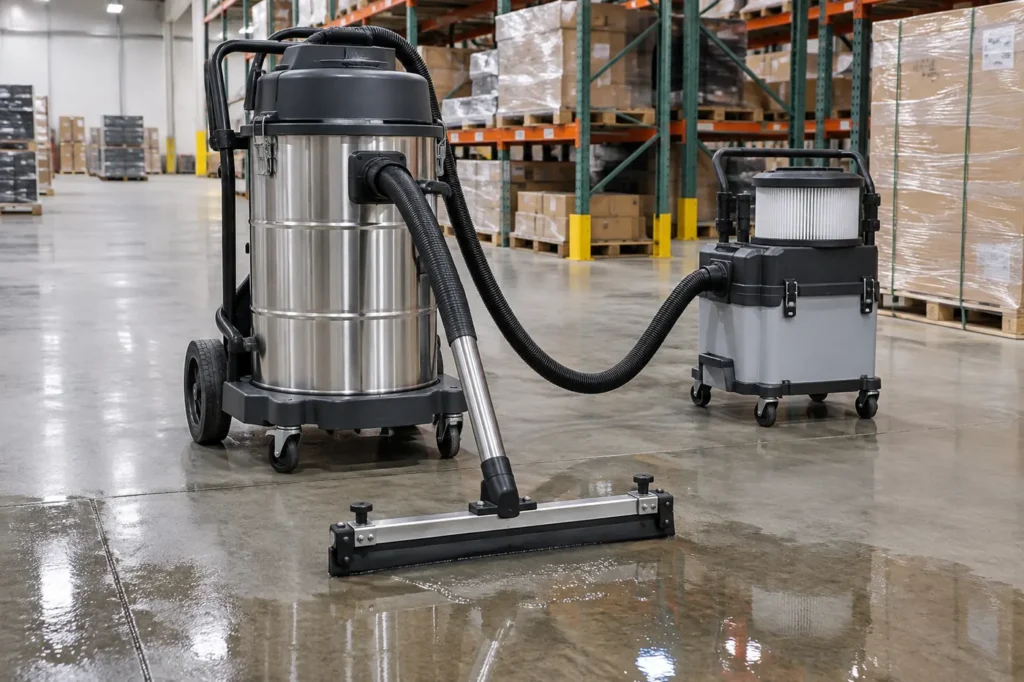
The best industrial vacuum depends on what you are picking up. For water, sludge and general debris in schools, warehouses and restaurants, a large commercial wet/dry machine like the 20 gallon ProTeam ProGuard 20 is the workhorse. For fine hazardous dust such as lead, silica and drywall, you need a certified HEPA machine: the Nilfisk Aero 21 is our pick, and the DeWalt DWV010 is the better choice when the vacuum is connected to power tools. On a tight budget, the Vacmaster Beast 10 gallon covers general shop cleanup.
For wet pickup and general industrial cleaning, buy a 20 gallon commercial wet/dry vacuum such as the ProTeam ProGuard 20 (front squeegee, 50 ft cord). For hazardous fine dust, buy a certified HEPA vacuum such as the Nilfisk Aero 21 (99.97% at 0.3 microns, 127 CFM). For power tool dust on job sites, choose a HEPA dust extractor with automatic filter cleaning like the DeWalt DWV010.
How we chose these vacuums
We have not run these machines side by side. The picks come from the makers’ published specs, Amazon and supplier listings in November 2026, and what maintenance and construction crews report on forums. Where a spec comes only from a seller’s listing, we say so. We weighted the right filtration for the job, tank size, cord and hose length, build quality and price.
Best industrial vacuums compared
| Model | Best for | Capacity | Filtration | Key specs | Price (Nov 2026) |
|---|---|---|---|---|---|
| ProTeam ProGuard 20 | Wet pickup and facility cleaning | 20 gal | Standard filter | Front squeegee, 50 ft cord, 10 ft hose | About $1,110 |
| Nilfisk Aero 21 | Hazardous fine dust, wet or dry | 5 gal | Certified HEPA, 99.97% at 0.3 microns | 127 CFM, 84 in water lift, 64 dB(A) | About $480 |
| DeWalt DWV010 | Power tool dust on job sites | 8 gal | HEPA (with DWV9330 filters) | 150 CFM, 15 A, auto filter cleaning every 30 seconds | About $480 |
| Vacmaster Beast VJN1012PF | Budget shop cleanup | 10 gal | Standard filter | 6.5 peak HP, 72 in water lift | About $180 |
| ProTeam ProGuard 4 | Spills and day porters | 4 gal | Standard filter | 20 ft cord, 10 ft hose | About $250 |
Prices are what Amazon listed in early November 2026 and change often.
Our picks on Amazon

ProTeam ProGuard 20, 20 gal wet/dry vacuum
Front mount squeegee for floor stripping and floods, tip-and-pour drain, 50 ft cord.
Check price on Amazon
Nilfisk Aero 21, 5 gal wet/dry HEPA vacuum
HEPA rated 99.97% at 0.3 microns, push-button filter cleaning, 127 CFM, 64 dB(A).
Check price on Amazon
DeWalt DWV010 HEPA dust extractor, 8 gal
Automatic filter cleaning, power tool on/off, 150 CFM. HEPA with DWV9330 filters.
Check price on Amazon
Vacmaster Professional Beast VJN1012PF, 10 gal
6.5 peak HP motor, 72 in water lift, one filter for wet and dry.
Check price on Amazon
ProTeam ProGuard 4, 4 gal wet/dry vacuum
Small and easy to carry for spills, restrooms and day porters.
Check price on AmazonAs an Amazon Associate we earn from qualifying purchases. Prices and availability change, so check the current price on Amazon.
1. ProTeam ProGuard 20: best for wet pickup and facilities
The ProGuard 20 has a 20 gallon drum, a front-mounted squeegee for pulling up water during floor stripping and flood cleanup, a tip-and-pour drain, a 50 ft cord and a 10 ft hose. Its filter changes need no tools. Schools, warehouses, restaurants and building maintenance crews use machines like this for floods, floor finishing and large spills.
- Why we like it: the front squeegee and large drum make big wet jobs fast, and the long cord covers a lot of floor.
- Watch out for: its standard filter is not HEPA. Do not use it for lead, silica or other hazardous dust.
2. Nilfisk Aero 21: best HEPA for hazardous dust
The Aero 21 is a 5 gallon wet/dry vacuum with a certified HEPA filter, rated at 99.97% at 0.3 microns. Nilfisk’s listing names lead, silica, asbestos and mold as hazardous dusts it is built for. It moves 127 CFM with 84 inches of water lift, runs at 64 dB(A), and has a push-and-clean button that knocks dust off the filter to keep suction up.
- Why we like it: certified HEPA, wet and dry pickup, and a quiet motor at a reasonable price.
- Watch out for: the 5 gallon tank fills fast on big jobs. For asbestos and other regulated work, confirm the exact requirements for your job and use the right disposal bags.
3. DeWalt DWV010: best for power tool dust
A dust extractor connects to a saw, grinder or drill and pulls dust away as you work. The DWV010 has an 8 gallon tank, a 15 amp motor rated at 150 CFM, automatic filter cleaning that pulses every 30 seconds so you can keep working, and power tool actuation that turns the vacuum on and off with the tool.
DeWalt’s listing states it meets the EPA lead renovation rule for HEPA vacuums only when DWV9330 filters are used. That detail matters if you do lead-safe renovation work.
- Why we like it: automatic filter cleaning keeps airflow steady during long cutting and grinding jobs.
- Watch out for: it is a dust extractor, not a wet pickup machine. Check the filter type before using it on regulated dust.
4. Vacmaster Beast 10 gallon: best budget pick
The Beast VJN1012PF is a 10 gallon wet/dry vac with a 6.5 peak HP motor and 72 inches of water lift. One filter handles wet and dry pickup. At about $180, it suits maintenance shops, garages and general cleanup where you do not need HEPA filtration or commercial-duty build.
- Why we like it: a lot of suction and capacity for the money.
- Watch out for: it is a heavy-duty shop vac, not a true industrial machine. It is not HEPA and is not built for all-day use.
5. ProTeam ProGuard 4: best compact wet/dry
The ProGuard 4 is a 4 gallon commercial wet/dry vacuum with a 20 ft cord, a 10 ft hose and tool-free filter changes. Day porters and restaurant staff use small machines like this for spills, restrooms and quick jobs.
- Why we like it: light and easy to carry, with commercial build quality.
- Watch out for: small capacity and a short cord. It is a spill machine, not a floor-stripping machine.
What makes a vacuum “industrial”?
- Duty cycle: motors and parts built to run for hours, every day.
- Capacity: larger tanks, from about 10 gallons up to drum-sized machines.
- Filtration: filters matched to the material, from standard cartridges to certified HEPA.
- Wet and dry pickup: most industrial vacuums handle both, with a float shut-off to protect the motor.
- Serviceability: replaceable motors, filters and hoses.
For heavy manufacturing, there is another class of three-phase and air-powered (pneumatic) industrial vacuums sold through specialist dealers. These are built for continuous use, large volumes of debris, and in some cases hazardous locations.
A warning about combustible dust
Fine dusts from wood, flour, sugar, plastics and many metals can burn or explode when they are suspended in the air. An ordinary shop vacuum’s motor or static build-up can ignite them. If you collect combustible dust, use a vacuum that is specifically rated for it, and follow your facility’s dust safety program.
How to choose an industrial vacuum
Match the filter to the material
For water and general debris, a standard filter is fine. For fine hazardous dust such as lead, silica, asbestos or mold, use a certified HEPA machine. Our guide to what a HEPA vacuum is explains what to look for.
Airflow and water lift
Airflow (CFM) moves light debris and dust. Water lift (inches) lifts heavy debris and water. Wet pickup and heavy material need strong water lift; fine dust collection needs good airflow.
Tank size
Bigger tanks mean fewer trips to empty, but a heavier machine. 10 to 20 gallons suits most facility work.
Filter cleaning
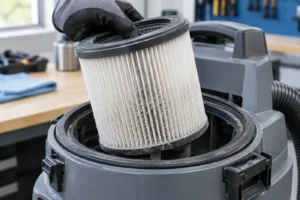
Fine dust clogs filters fast. Automatic or push-button filter cleaning keeps suction steady without stopping to remove the filter.
Cord, hose and tools
A 50 ft cord saves outlet changes on big floors. A squeegee tool turns a wet/dry vac into a floor water pickup machine.
Frequently asked questions
What is the best industrial vacuum cleaner?
It depends on the job. For wet pickup and general facility cleaning, a 20 gallon commercial wet/dry vacuum like the ProTeam ProGuard 20. For hazardous fine dust, a certified HEPA machine like the Nilfisk Aero 21. For power tool dust, a HEPA dust extractor like the DeWalt DWV010.
What is the most powerful industrial vacuum?
The most powerful machines are three-phase electric and air-powered industrial vacuums used in manufacturing, sold through specialist dealers. Among portable machines, compare airflow (CFM) for dust and water lift for heavy debris and liquids rather than peak horsepower.
What vacuums do professionals use?
Cleaning crews use commercial uprights and backpack vacuums for carpet, wet/dry vacuums for spills and floor stripping, and HEPA vacuums or dust extractors for hazardous dust. Construction crews use HEPA dust extractors connected to their tools.
Is a shop vac the same as an industrial vacuum?
Not quite. A shop vac is built for occasional use. Industrial and commercial wet/dry vacuums have tougher motors and parts for daily use, larger tanks, better filtration options and replaceable parts.
Can I use a wet/dry vacuum for lead or silica dust?
Only if it is a certified HEPA vacuum built for that purpose. A standard wet/dry vac, or one with a HEPA filter added later, does not meet the EPA lead renovation rule.
Cleaning carpeted offices rather than shops or plants? Our best commercial upright vacuums and best commercial backpack vacuums guides cover daily carpet work.
Bottom line: buy a 20 gallon wet/dry like the ProTeam ProGuard 20 for water and general facility work, a certified HEPA vacuum like the Nilfisk Aero 21 for hazardous dust, a DeWalt DWV010 for power tool dust, and a Vacmaster Beast when budget matters more than duty cycle.
[…] cannot. Picking up liquid can damage the motor. Use a wet/dry vacuum for spills; our guide to the best industrial vacuums covers wet/dry […]
[…] Wet/dry and industrial vacuums pick up water, slurry and heavy debris. See best industrial vacuums. […]