How to Clean a Warehouse Floor: Step-by-Step, With a Cleaning Schedule

Some links in this guide are affiliate links. If you buy through them we may earn a commission, at no extra cost to you. This never affects what we recommend or how we rank equipment. Read our disclosure.
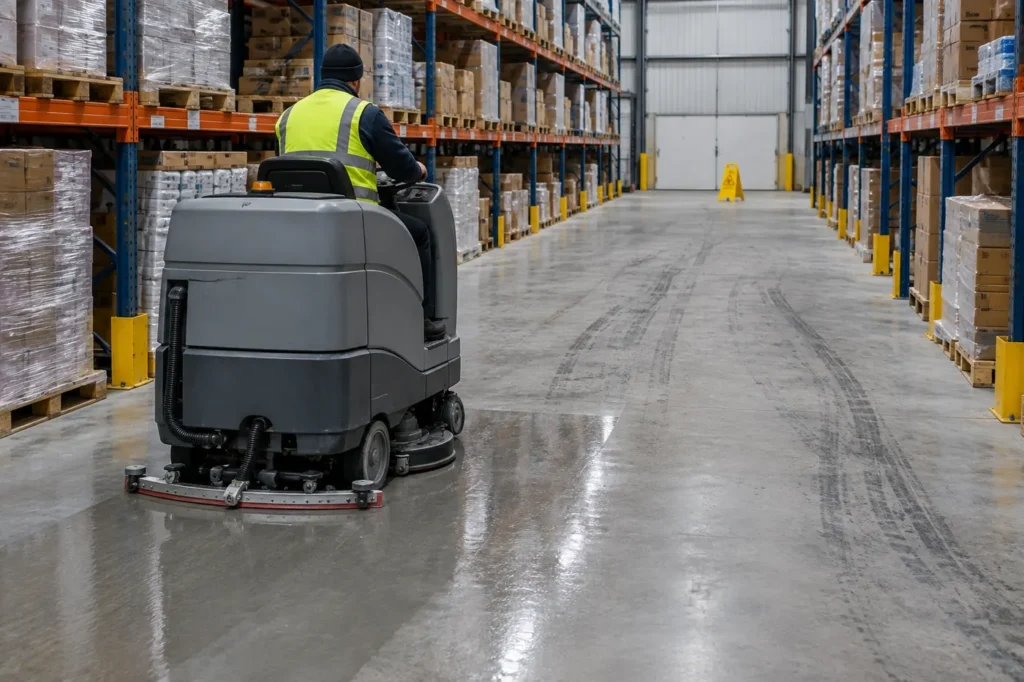
How to clean a warehouse floor: pick up large debris, sweep with a dust-controlled sweeper, soak up and pre-treat oil spills, then scrub with a low-foam detergent and a pad or brush that suits your concrete. Finish the edges and the spaces under racking by hand, and empty and rinse the machines when you are done. On most warehouse floors that means sweeping every day and scrubbing every week or two, more often in busy aisles and at dock doors.
The order matters most: sweep before you scrub. Karcher North America’s director of training has said that about 80% of the soil in a warehouse or distribution center is dry particulate, and that scrubbing over it turns the scrubber pad into “one large sanding disc” that dulls the floor and clogs the squeegee. So remove debris, sweep, treat oil spills with absorbent and degreaser, then scrub. Tennant’s suggested schedule is daily sweeping, weekly or bi-weekly scrubbing, and periodic deep cleaning of high-traffic areas.
What you need
| Job | Tool | Notes |
|---|---|---|
| Large debris | Gloves, dustpan, bins | Banding, shrink wrap, pallet chips and screws come up by hand first |
| Dry soil and dust | Floor sweeper | Push sweeper for small floors, battery or ride-on for large ones |
| Oil and fluid spills | Granular clay absorbent and a degreaser | Clean up spills right away; they are slip hazards |
| Washing | Floor scrubber with low-foam detergent | Walk-behind for aisles, ride-on for open floors |
| Edges and under racking | Broom, backpack vacuum, mop | Machines miss the last few inches along walls and racking |
| Loading docks and yards | Pressure washer, outdoors only | Check where the runoff goes before you wash |
Step 1: Pick up large debris
Walk the floor before any machine runs. Pick up banding, strapping, shrink wrap, pallet chips, broken pallet boards, screws and anything else bigger than about a pencil eraser. A sweeper can handle a lot of debris, but strapping and plastic film wrap around brushes, and long pieces jam hoppers. Scrubbers handle large debris even worse. It catches under the squeegee and in the recovery hose.
Plan the route at the same time. Clean one zone at a time, keep forklift traffic out of the zone you are working in, and put out wet floor signs where you will scrub. Start at the far end of an aisle and work back toward the exit so you are not walking or driving over finished floor.
Step 2: Sweep with dust control
Sweeping removes the dry soil that makes up most of the dirt on a warehouse floor. Dust, sand and grit blow in every time a dock door opens and get ground into the concrete by forklift wheels. A push broom moves much of it into the air, where it settles on product and racking. A powered sweeper pulls air through a filter, which traps the fine dust, and some sweepers also spray a light mist at the side brooms to keep dust down.
Karcher’s training director describes two main types of sweeper:
- Direct throw sweepers flick debris straight into a hopper in front of the brush. They work well on fine debris.
- Overthrow sweepers lift debris over the brush into a hopper behind it. He recommends them for anything larger than small pallet chips, because they hold more before the hopper needs emptying.
Use the side brush along walls and racking, and empty the hopper and shake the dust filter before suction drops. For small warehouses and stockrooms, a manual push sweeper is enough. Our commercial floor sweeper guide covers manual, battery and ride-on picks, and floor sweeper vs floor scrubber explains which machine does which job.
Step 3: Treat spills and oil stains
Under OSHA’s walking-working surfaces rule (29 CFR 1910.22), employers must keep floors clean, orderly and free of hazards such as leaks and spills. In a warehouse, the usual spills are hydraulic fluid and oil from forklifts, battery water, beverages and product leaks.
- Contain fresh spills. Spread granular clay absorbent over the spill and work it in with a broom.
- Sweep it up. Once it has soaked up the liquid, sweep up the absorbent and dispose of it as the spilled product’s safety data sheet says. Do not run it through a scrubber.
- Pre-treat the stain. Apply a degreaser to old oil stains and tire marks, let it sit for the time on the label, and agitate it with a deck brush.
- Let the scrubber finish it. The scrubber will pick up the loosened oil and the degreaser in the next step.
If forklifts leave the same drip spots every day, fix the leak. No cleaning routine keeps up with a machine that is losing fluid.
Step 4: Scrub with the right pad and detergent
Scrubbing removes what a sweeper cannot: tire marks, ground-in grime, oily film and dried spills. Use a low-foam detergent made for automatic scrubbers, mixed at the label’s dilution. Ordinary high-foam cleaners fill the recovery tank with foam, which can reach the vacuum motor. If foam builds up, use a defoamer in the recovery tank.
Match the pad or brush to the floor:
| Floor | Pad or brush | Watch out for |
|---|---|---|
| Bare, unsealed concrete | Scrub brush, or a medium to heavy pad | It soaks up solution, so Nilfisk notes you may need more flow; still avoid flooding the floor |
| Sealed or epoxy-coated concrete | Light to medium pad, non-abrasive | Aggressive pads and grit brushes can scratch or strip the coating |
| Polished concrete | Non-aggressive pad, controlled solution flow | Sweep often, because grit dulls the polish |
| Heavy tire marks or grease | Heavier pad or brush, degreaser pre-treatment | Test a small area first on coated floors |
Pad colors are not fully standard between makers, but on most lines red is for light scrubbing, blue for medium scrubbing, green for heavy scrubbing and black or brown for stripping. Check the pad maker’s chart and your floor coating’s care instructions.
Scrub in straight passes and overlap each pass by a couple of inches. Go slower in dirty areas so the pad has time to work. Watch behind the machine: if it leaves water trails, stop and check the squeegee and recovery hose. Our guide on how to use a floor scrubber covers each step, and if the machine leaves water behind, see floor scrubber not picking up water or floor scrubber leaving streaks.
Step 5: Clean edges and under racking
Scrubbers and sweepers miss the last few inches along walls, columns and rack uprights, and they cannot reach under the bottom beam of most racking. Dust and debris collect there, and so do pests. Clear these areas on a schedule:
- Sweep or vacuum along walls and rack bases. A backpack vacuum reaches under racking faster than a broom.
- Mop the strip along walls after a scrubber pass if it left dirty edges.
- Clean under racking when bays are empty during inventory moves.
If the dust in your building contains crystalline silica, for example from cutting or grinding concrete, follow OSHA’s silica rules. They limit dry sweeping and brushing where wet methods or HEPA vacuuming are feasible. Our guide to HEPA vacuums explains the difference.
Step 6: Empty, rinse and charge the machines
At the end of each cleaning session:
- Empty and rinse the scrubber’s recovery tank, and drain any leftover solution.
- Wipe the squeegee blades and check them for nicks.
- Empty the sweeper’s hopper and clean its dust filter.
- Charge both machines fully, and water flooded batteries after charging.
Our floor scrubber maintenance checklist has the full daily, weekly and monthly list, and how long floor scrubber batteries last covers charging habits that protect the batteries.
Spill and scrubbing supplies

Oil-Dri premium clay absorbent, 2 x 36 lb bags
Granular clay that soaks up oil, hydraulic fluid and water. Sweep it up once the spill is absorbed.
Check price on Amazon
Simple Green Industrial Cleaner and Degreaser
Concentrate for pre-treating grease and tire marks. The listing says it can be used in floor scrubbers. Dilute as the label says.
Check price on Amazon
Detco Scrubbles low-foam auto scrubber cleaner, 1 gal
Low-foam concentrate made for automatic scrubbers.
Check price on AmazonAs an Amazon Associate we earn from qualifying purchases. Prices and availability change, so check the current price on Amazon.
How often to clean a warehouse floor
| Task | How often | Notes |
|---|---|---|
| Pick up large debris | Every shift | Pallet chips and banding are trip hazards |
| Sweep | Daily | More often at dock doors and in dusty operations |
| Clean up spills | Right away | Absorbent first, then degreaser and scrubbing |
| Scrub main aisles | Weekly or every two weeks | Tennant’s suggestion; busier floors need it more often |
| Scrub high-traffic areas and docks | Several times a week | Dock aisles collect the most grit and tire marks |
| Edges and under racking | Monthly, or at inventory moves | Also helps with pest control |
| Deep clean | Quarterly or as needed | Heavier pads and degreaser on stained areas |
Adjust the schedule to what you see. If the floor looks dirty again two days after scrubbing, sweep more often. Dry grit is usually the cause, not too little scrubbing.
Cleaning a small warehouse without machines
For a small stockroom, a push broom with sweeping compound, a mop and a wet/dry vacuum can be enough. Sweeping compound is a damp, granular material that holds dust down while you sweep. Mop with a degreasing cleaner and two buckets, one for solution and one for rinse water, so you are not spreading dirty water. Once mopping takes most of a shift, a manual push sweeper and a small walk-behind scrubber usually pay for themselves in labor. Our floor scrubber price guide lists current prices.
What about pressure washing?
Pressure washers suit loading docks, dock aprons, yards and dumpster pads outdoors, where heavy grime and oil build up. Indoors, they leave far more water on the floor than a scrubber can pick up, and the spray can damage stock, racking and electrical equipment. Outdoors, check local rules on wastewater: oily runoff often cannot go into storm drains. For oily docks, hot water pressure washers clean grease much faster than cold.
Frequently asked questions
What is the best way to clean a warehouse floor?
Pick up large debris, sweep with a powered sweeper, treat spills with absorbent and degreaser, then scrub with a floor scrubber and low-foam detergent. Clean edges and under racking by hand, and keep to a regular schedule.
How often should a warehouse floor be cleaned?
Sweep daily, clean spills right away, and scrub main aisles weekly or every two weeks. High-traffic areas and loading docks usually need scrubbing several times a week.
What do you use to clean warehouse concrete floors?
A sweeper for dry soil, a floor scrubber with a low-foam detergent for washing, clay absorbent for spills, and a degreaser for oil stains and tire marks. Match the pad or brush to whether the concrete is bare, sealed, coated or polished.
How do you remove forklift tire marks from concrete?
Pre-treat them with a degreaser, let it sit, and agitate with a deck brush. Then scrub with a medium or heavy pad or a scrub brush. On sealed or epoxy floors, test a heavier pad on a small area first so you do not scratch the coating.
Should you sweep before scrubbing a warehouse floor?
Yes. Most warehouse soil is dry grit. Scrubbing over it grinds it into the floor, dulls the surface and clogs the squeegee and recovery hose.
Bottom line: pick up debris, sweep daily, deal with spills right away, and scrub on a schedule with the right pad and a low-foam detergent. Sweeping first is the step that makes everything after it work.
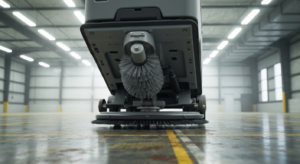
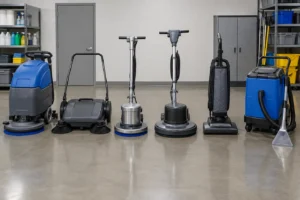
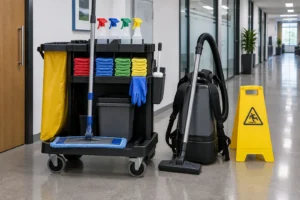
[…] A sweeper picks up dry debris: dust, sand, packaging, gravel and litter. A scrubber washes the floor and picks up the dirty water. Many warehouses sweep first and scrub after, because a scrubber is not built to collect large debris. Our guide to the best walk-behind floor scrubbers covers the washing side, and our floor sweeper vs floor scrubber guide explains when you need one, the other or both. For the full routine, see how to clean a warehouse floor. […]
[…] industrial floors, see how to clean a warehouse floor and floor sweeper vs floor […]
[…] a warehouse routine that uses these machines in order, see how to clean a warehouse floor. If you are equipping a cleaning business, our commercial cleaning equipment list shows what to buy […]