How to Use a Floor Scrubber: Step by Step, From Setup to Shutdown

Some links in this guide are affiliate links. If you buy through them we may earn a commission, at no extra cost to you. This never affects what we recommend or how we rank equipment. Read our disclosure.
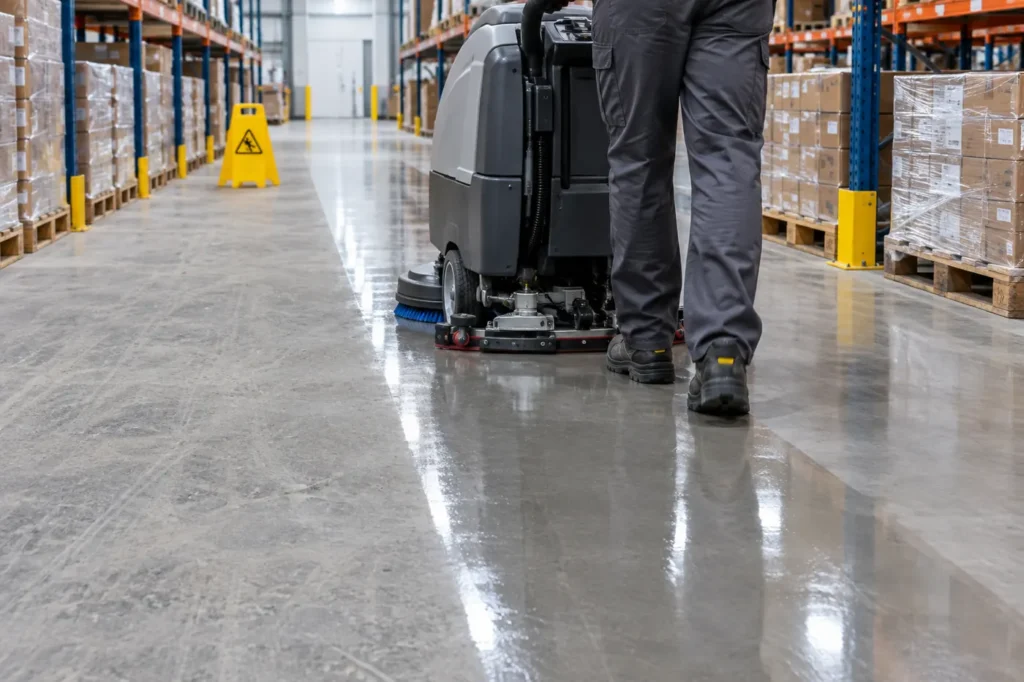
To use a floor scrubber, sweep the floor first, fill the solution tank with clean water and the right amount of low-foam detergent, fit the correct pad or brush, then lower the brush deck and squeegee and walk the machine forward in straight, slightly overlapping lanes at a steady pace. Empty and rinse the recovery tank and charge the batteries when you finish. Most bad results, like streaks and water left behind, come from skipping a step before the machine ever starts.
Sweep or dust mop first. Fill the solution tank with water and low-foam scrubber detergent at the label dilution. Fit the right pad or brush for the floor. Lower the brush and squeegee, start moving, and scrub forward in straight lanes that overlap by a few inches. Never back up with the squeegee down. When done, drain and rinse the recovery tank, clean the squeegee and charge the batteries.
Before you start
Sweep the floor first
Yes, you have to sweep before using a floor scrubber, unless the floor only has light dust. A scrubber washes and picks up liquid. It is not built to collect large debris. Grit, zip ties, plastic wrap and screws get caught under the squeegee, tear the blade edges, and block the recovery hose. Sweep or dust mop, or use a sweeper first on dirty warehouse floors.
Set up the area
- Put out wet floor signs and close off the area if people are walking through.
- Move mats, cords and small furniture out of the path.
- Wear non-slip shoes. Wear gloves and eye protection when handling detergent concentrate.
- Check that the batteries are fully charged, or that a corded machine has its cord routed behind you.
Inspect the machine
- Recovery tank: empty and rinsed, with the float or shut-off screen clean so it can move.
- Squeegee: blades clean, with straight edges and no tears. A nicked rear blade is the most common cause of streaks.
- Pad or brush: the right type for the floor, and not worn down.
- Hoses: the recovery hose is connected and not cracked.
Choose the right pad or brush
Pads suit smooth floors like sealed concrete, VCT and finished floors. Brushes suit grouted tile, textured concrete and rough surfaces where a pad cannot reach into the low spots. Pad colors vary a little by maker, but the common pattern runs from soft to aggressive:
| Pad color | Typical use |
|---|---|
| White | Polishing and light buffing |
| Red | Light daily cleaning and spray buffing |
| Blue | Heavier cleaning |
| Green | Scrubbing heavy soil |
| Brown or black | Stripping old floor finish |
For daily cleaning of a finished floor, start with the mildest pad that gets the floor clean. An aggressive pad on a finished floor removes the finish you paid for. Check your pad maker’s chart for the exact color code.
Fill the solution tank
- Use a low-foam detergent made for automatic scrubbers. High-foam cleaners fill the recovery tank with foam, which can get pulled into the vacuum motor.
- Measure the detergent. Use the dilution on the label. More chemical does not clean better. It leaves a sticky residue that attracts dirt and can make the floor slippery.
- Use water at the temperature your manual allows. Some machines limit how hot the solution can be.
- Do not overfill. Stop at the fill line, so the recovery tank has room for everything you pick up.
Some operators add a small amount of defoamer to the recovery tank when a floor still has old soap residue on it. It helps protect the vacuum motor.
Supplies mentioned in this guide

Detco Scrubbles low-foam auto scrubber cleaner, 1 gal
Concentrate made for automatic scrubbers. Follow the dilution on the label.
Check price on Amazon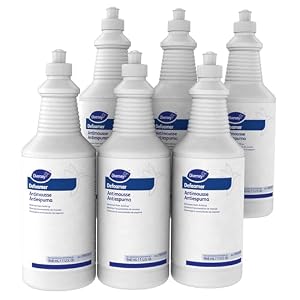
Diversey defoamer for auto scrubbers and extractors
Goes in the recovery tank when a floor still has old soap residue.
Check price on Amazon
3M red buffer floor pad 5100, 20 inch, 5 pack
Light daily scrubbing without dulling the finish. Buy the diameter that fits your pad driver.
Check price on AmazonAs an Amazon Associate we earn from qualifying purchases. Prices and availability change, so check the current price on Amazon.
How to operate a floor scrubber, step by step
- Turn the machine on and lower the brush deck. On most walk-behind scrubbers the brush or pad starts when you squeeze the handle bail.
- Lower the squeegee and turn on the vacuum. On many machines this happens together with the brush, on others it is a separate switch.
- Start moving before the brush has time to sit in one spot. A spinning brush or pad left in one place can mark or burn the floor.
- Walk forward at a steady, slow pace. The squeegee needs a moment to pick up the water. Too fast leaves water behind.
- Scrub in straight lanes and overlap each pass by a few inches, so no strip between lanes is missed. Most operator manuals recommend a small overlap.
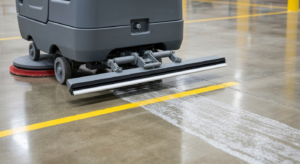
- Watch the floor behind you. It should be almost dry. Wet trails or streaks mean the squeegee, the hose or the recovery tank needs attention.
- Turn smoothly at the end of each lane. Sharp turns can lift one end of the squeegee off the floor and leave water.
- Do not back up with the squeegee down. Reversing can fold the blades and damage them. Lift the squeegee first, or turn the machine around.
- Stop when the recovery tank is full. Most machines shut off the vacuum through a float. Empty the tank, then carry on.
What direction does a floor scrubber clean in?
A walk-behind scrubber cleans moving forward. The brush scrubs at the front and the squeegee at the back pulls up the dirty water, so the floor behind you is clean and dry. Plan your lanes so you start at the far side of the area and finish at the exit, and you never have to walk across the floor you just cleaned.
Clean along walls and edges first, then fill in the open floor in long, straight lanes. Long lanes mean fewer turns and fewer places to leave water.
Heavy soil: double scrubbing
On very dirty floors, one pass is often not enough. Do a first pass with the squeegee up and the vacuum off, so the solution stays on the floor and loosens the dirt for a few minutes. Do not let it dry. Then make a second pass with the squeegee down to scrub again and pick everything up. This works well on warehouse floors and kitchens with grease.
After you finish
- Drain the recovery tank into an approved drain and rinse it with clean water.
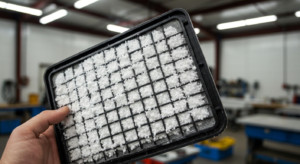
- Clean the debris tray and float screen.
- Wipe the squeegee blades and check the edges.
- Remove the pad or brush and rinse it.
- Charge the batteries fully in a ventilated area.
Our floor scrubber maintenance checklist covers the full daily, weekly and monthly routine.
Common mistakes and quick fixes
| Problem | Likely cause | Fix |
|---|---|---|
| Water left behind | Worn squeegee, full recovery tank, loose recovery hose, moving too fast | Slow down, empty the tank, check the squeegee and hose |
| Streaks on the floor | Nicked squeegee blade, too much detergent, dirty pad | Rotate or replace the blade, measure the detergent |
| No solution coming out | Empty tank, clogged solution filter, flow turned off | Refill, clean the filter, check the flow setting |
| Foam in the recovery tank | High-foam detergent or too much chemical | Switch to low-foam detergent and add defoamer |
| Swirl marks or burned spots | Brush left spinning in one place, pad too aggressive | Keep moving and use a milder pad |
If a problem keeps coming back, our repair guides go deeper: a scrubber not picking up water, a scrubber leaving streaks, and solution not dispensing.
Are floor scrubbers worth it?
For large hard floors, yes. A mop spreads dirty water around, while a scrubber scrubs, rinses and picks up the dirty water in one pass, and the floor dries in minutes. That means cleaner floors, fewer slip hazards and much less labor per square foot. For a small shop or office with a few hundred square feet of hard floor, a good mop and bucket can still make more sense than the cost of a machine and its batteries. If you are choosing a machine, see our picks for the best walk-behind floor scrubbers.
Frequently asked questions
Do you have to sweep before using a floor scrubber?
Yes, unless the floor only has light dust. Large debris tears the squeegee blades and blocks the recovery hose. Sweep or dust mop first.
Can you use regular floor cleaner in a floor scrubber?
Only if it is low-foam and approved for automatic scrubbers. Household and high-foam cleaners can fill the recovery tank with foam and damage the vacuum motor.
How fast should you walk with a floor scrubber?
At a slow, steady walking pace. If water is left behind the squeegee, slow down before you change anything else.
Can you use a floor scrubber on carpet?
No. Floor scrubbers are made for hard floors. Use a carpet extractor for carpet.
How often should I change the pad?
Turn the pad over or replace it when it is loaded with dirt or worn thin. On dirty floors that can be more than once a shift. A clogged pad pushes dirt around instead of lifting it.
Bottom line: sweep first, use measured low-foam detergent and the right pad, walk forward in straight overlapping lanes, never reverse with the squeegee down, and finish every shift by emptying the recovery tank and charging the batteries.
[…] you have a machine, our guides on how to use a floor scrubber and the floor scrubber maintenance checklist help it […]