How to Clean a Floor Scrubber (and Stop the Smell)

Some links in this guide are affiliate links. If you buy through them we may earn a commission, at no extra cost to you. This never affects what we recommend or how we rank equipment. Read our disclosure.
Here is how to clean a floor scrubber: drain and rinse the recovery tank after every use, clean the debris strainer and the vacuum shutoff, rinse and wipe the squeegee, take off the brushes or pads, and leave everything open to air dry before you charge the batteries. A smelly scrubber is most often a recovery tank that was left with dirty water in it. Here is the routine, the deep clean that clears an odor, and how to rescue a tank that has been neglected.
After every use: drain the recovery tank, rinse it with clean water until no sludge is left, clean the debris strainer and the vacuum shutoff float, rinse and wipe the squeegee, remove and rinse the brushes or pads, leave the tank lids open to dry, and charge the batteries. To clear a smell, fill the rinsed tank with a deodorizing cleaner at the label’s dilution, let it stand, drain, rinse and air dry.
Why floor scrubbers start to smell
The recovery tank is the usual cause. Hillyard says “one primary cause is the failure to drain the recovery tank fully,” and that dirt, water and soil left inside can harbor bacteria and odor. Betco says that with or without visible residue, a smelly tank means bacteria is present.
Other sources of odor:
- Wet brushes, pads and squeegees. Hillyard notes these can smell if they stay wet too long.
- A closed, damp tank. A tank sealed up while wet stays humid inside.
- White or gummy residue. Betco says white residue usually means the cleaning chemical was too dilute, and gummy material on the filter means incompatible chemicals were mixed in the tank.
How to clean a floor scrubber after every use
These are Hillyard’s daily steps, in order.
- Drain the recovery tank. Hillyard says draining the recovery tank after every clean is needed for good equipment hygiene and to prevent build-up. Drain it where your facility allows wastewater, such as a floor drain or mop sink.
- Rinse it. Follow the drain with a rinse of clean water. Keep rinsing until no sludge or residue is left, as Hillyard advises.
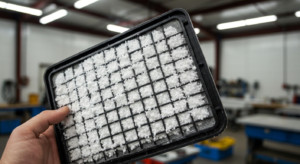
- Clean the shutoff and strainer. Hillyard says to clean the vacuum shutoff mechanism first, then the large debris strainer in the recovery tank, which catches paper and rocks. A dirty shutoff can stop the vacuum and leave water on the floor.
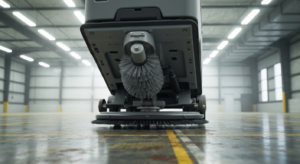
- Check the brushes or pads. Remove the brushes or pad drivers and inspect them. Rinse brushes and hang pads to dry.
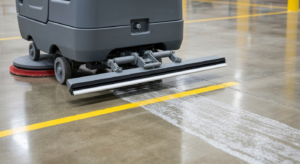
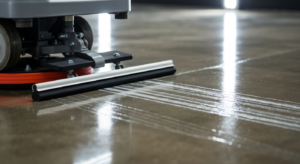
- Clean the squeegee. Rinse it thoroughly, wipe off remaining debris with a cloth, and inspect the blades for wear, as Hillyard describes.
- Air dry. Hillyard says to let everything dry in a well-ventilated room. Leave the tank lids open so the inside dries.
- Charge the batteries so the machine is ready for the next shift.
The solution tank needs less attention. Hillyard says to drain it about once a month and clean its strainer at the same time, if your machine has one. For the full daily, weekly and monthly schedule, see our floor scrubber maintenance checklist.
How to get rid of a floor scrubber smell
If the routine above is not enough, deodorize the recovery tank. Hillyard’s method:
- Put on rubber or other impervious gloves and splash goggles.
- Turn the machine off and drain the recovery tank completely.
- Flush the tank and scrub the inside to remove sludge, and clean the debris filter.
- Fill the tank with a deodorizing cleaner mixed at its label dilution. Hillyard uses its hydrogen peroxide cleaner Suprox at 3 to 5 ounces per gallon.
- Let it work for at least 15 minutes.
- Drain, rinse thoroughly with clean water, and leave the tank open to air dry.
Betco’s alternative for a bacterial odor is a mild bleach solution used according to the label; it gives the example of a 12.5% bleach product diluted 1:20. Check your scrubber’s manual before using bleach in the tank, and follow one firm rule from Betco: “Never mix acids and bleach solutions when cleaning, as it produces a toxic gas.” Rinse the tank well before going back to your normal floor chemical.
How to clean a neglected, filthy recovery tank
A tank that has been left dirty for weeks often has black sludge on the walls and a smell that comes straight back. Work through it in stages:
- Drain and remove loose sludge with clean water and a long-handled brush. Some recovery tanks lift out, which makes scrubbing much easier; Betco recommends removing the tank to inspect it.
- Clean the hoses. Flush the recovery and drain hoses, since sludge builds up there too.
- Deodorize with the peroxide or bleach method above, at the label dilution.
- Dry it fully with the lids open before you close the machine up.
- Repeat if needed. A badly neglected tank may need two rounds.
Then put the daily drain-rinse-dry routine in place so it does not come back. If you see white crust or gummy residue, review how you dilute your floor cleaner, as Betco links both to chemical problems. If the machine is leaving water behind as well, see our guide to a floor scrubber not picking up water.
Quick reference
| Part | How often | What to do |
|---|---|---|
| Recovery tank | After every use | Drain, rinse until clean, leave open to dry |
| Debris strainer and vacuum shutoff | After every use | Remove debris, rinse |
| Squeegee | After every use | Rinse, wipe, check blades for wear |
| Brushes or pads | After every use | Remove, rinse, dry |
| Solution tank | About monthly | Drain, clean its strainer if fitted |
| Deodorizing treatment | When it smells | Cleaner at label dilution, at least 15 minutes, rinse |
A clean machine also cleans better. Our guide to how to use a floor scrubber covers the operating side, and worn squeegee blades are covered in how to replace floor scrubber squeegee blades.
What we would buy for this job

Sentinel Formula 522 Odor Puck, waste tank odor eliminator with foam control
Listed for auto scrubbers and carpet extractors. Use as the label directs, alongside regular draining and rinsing.
Check price on Amazon
SPARTA tank brush with handle, 16 inch, polyester bristle
For scrubbing sludge off recovery tank walls. Measure your tank opening first.
Check price on AmazonAs an Amazon Associate we earn from qualifying purchases. Prices and availability change, so check the current price on Amazon.
Common questions
How do you clean a floor scrubber machine?
Drain and rinse the recovery tank after every use, clean the debris strainer and vacuum shutoff, rinse and wipe the squeegee, remove and rinse the brushes or pads, leave the tank open to air dry, and charge the batteries.
Why does my floor scrubber smell so bad?
Usually because dirty water was left in the recovery tank. Hillyard says not draining the tank fully is a primary cause, and Betco says a smelly tank means bacteria is present.
How do you deodorize a floor scrubber tank?
Drain and rinse it, fill it with a deodorizing cleaner at the label dilution, let it stand at least 15 minutes as Hillyard advises, then drain, rinse and leave it open to dry.
Can I put bleach in my floor scrubber?
Betco suggests a mild bleach solution for bacterial odor in the tank, used according to the label. Check your machine’s manual first, rinse well afterward, and never mix bleach with acid cleaners.
How often should you clean a floor scrubber?
Drain and rinse the recovery tank and clean the squeegee after every use. Hillyard says to drain the solution tank about once a month.
Should you leave water in a floor scrubber overnight?
No. Leaving dirty water in the recovery tank is the main cause of odor. Drain and rinse it after every use and leave the lid open to dry.
Bottom line: drain, rinse and dry the recovery tank after every shift, clean the strainer, shutoff and squeegee, and deodorize with a label-strength cleaner only when the routine is not enough.