Commercial Vacuum Losing Suction: How to Find and Fix the Cause

Some links in this guide are affiliate links. If you buy through them we may earn a commission, at no extra cost to you. This never affects what we recommend or how we rank equipment. Read our disclosure.
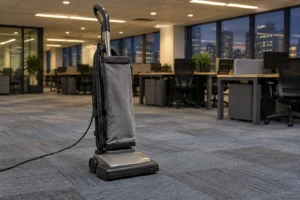
When a commercial vacuum is losing suction, the cause is almost always something blocking or leaking air: a full or clogged bag, a dirty filter, a blockage in the hose, wand or floor head, or a loose hose connection. On uprights, a broken or slipping belt stops the brush and makes the machine seem weak even when suction is fine. Bissell, which makes Sanitaire, says most suction loss comes from an obstruction in the air path, so test the airflow section by section before you suspect the motor.
Check in this order: the bag (replace it before it is full, sooner with fine dust), the filters (clean or replace, including any HEPA or exhaust filter), the hose (feel for suction at the hose end, then at the machine), the wand and floor head (look for a jam), the hose cuffs and seals, and on uprights the belt and brush roll. A vacuum with good suction at the hose but none at the floor head has a blocked head, a broken belt or the wrong height setting. Strong suction everywhere but poor pickup is usually a belt or brush problem.
Find the problem: test suction section by section
Bissell’s support advice for Sanitaire uprights starts with testing suction at the end of the hose. Work from the motor outward:
- Remove the hose at the machine and feel the suction at the machine’s inlet. Weak here means the bag, filters or motor.
- Reconnect the hose and feel the suction at the free end. Weak here, but strong at the inlet, means the hose is blocked or leaking.
- Add the wand, then the floor tool, one at a time. The point where suction drops is where the blockage is.
| What you find | Likely cause | Fix |
|---|---|---|
| Weak at the machine inlet | Full or clogged bag, dirty filter, motor problem | Change the bag, clean or replace filters |
| Strong at inlet, weak at hose end | Hose blocked, split or loose cuff | Clear the hose, replace if split |
| Strong at hose, weak at floor head | Head or wand blocked, wrong height | Clear the head, set the height |
| Strong suction but poor pickup on carpet | Broken or slipping belt, worn brush, brush not spinning | Replace the belt, clean or replace the brush roll |
| Suction comes and goes | Loose connection, tear in the bag, intermittent blockage | Check every joint and seal |
1. The bag is full, or clogged before it is full
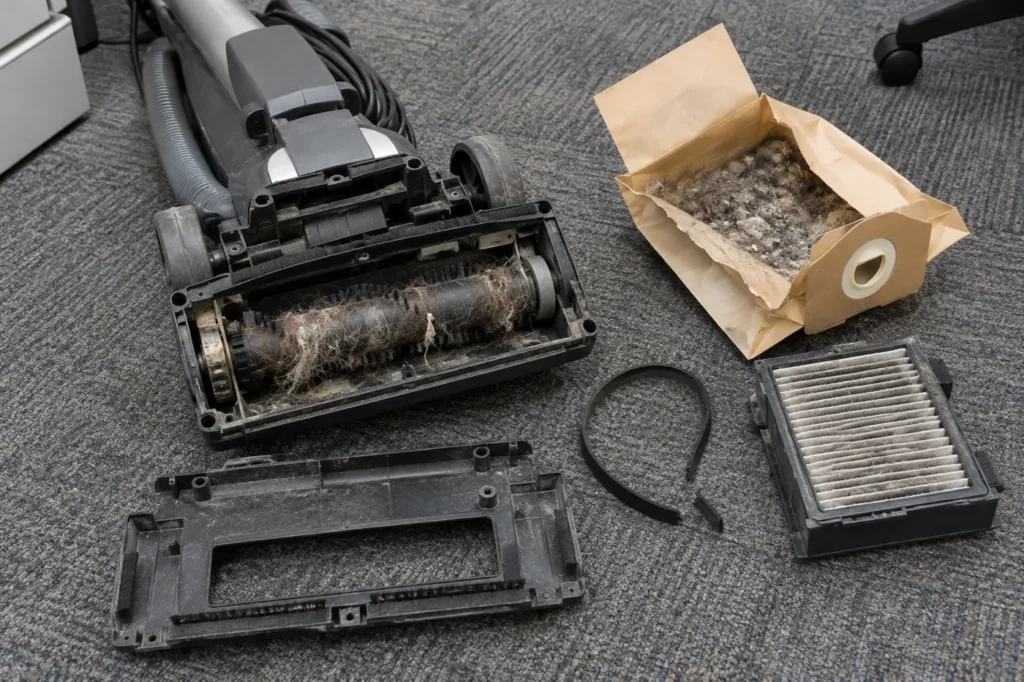
Bags filter air as well as hold dirt. As the pores fill, airflow drops long before the bag looks full. Fine dust such as drywall dust, toner, powder and fine sand clogs a bag far faster than normal soil.
- A common rule is to change bags at about two thirds full in normal use, and sooner with fine dust. Check your manual for its fill line.
- Use the bag type the maker specifies. A bag that does not seat in its collar leaks dust past the filter and into the motor.
- On bagless or cloth-bag machines, empty the container and clean the cloth bag regularly.
2. The filters are dirty
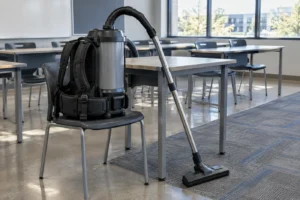
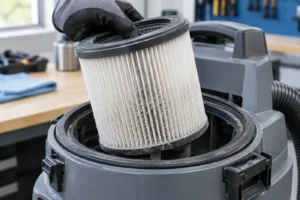
Commercial vacuums often have several filters: a pre-motor filter, a HEPA or exhaust filter, and on backpacks a cloth filter behind the paper bag. Any one of them clogged cuts airflow. Sanitaire’s manual for its SC5713 and SC5815 uprights says to check the filters, belt and brush roll often.
- Tap out or rinse washable filters as the manual says, and let them dry completely before refitting.
- Replace paper and HEPA filters on schedule; they cannot be washed.
- Never run without the filters. Dust reaching the motor wears it out.
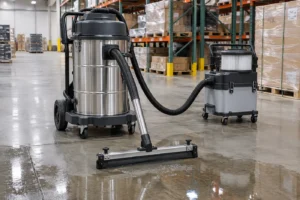
Wet/dry machines have their own rule. ProTeam says that for dry pickup the dry filter must be installed, because without it fine dust reaches the motor. Using a wet-pickup setup on fine dust also clogs quickly. See our guide to what a HEPA vacuum is for when a sealed HEPA system matters.
3. The hose, wand or floor head is blocked
Blockages collect where air turns a corner: the hose cuffs, the elbow at the floor head, and the inlet of the bag compartment. Common culprits are paper, plastic wrappers, cable ties, pens, hair and wet debris that has dried into a plug.
- Look through the hose toward a light, or drop a coin through it while holding it straight.
- Push a blockage out with a broom handle from the clear end, gently, so you do not split the hose.
- On uprights, check the passage behind the brush roll where dirt enters the hose.
4. A hose or seal is leaking air
A split hose or a loose cuff lets air in before it reaches the floor, so the machine sounds normal but picks up little. Sanitaire’s manual lists “no suction at end of hose” and says to make sure the hose adapter is secure.
- Run the vacuum and bend the hose along its length, listening for a hiss.
- Check the hose cuffs, wand joints and the bag door seal.
- Replace a split hose; tape is a short-term fix at best.
5. Upright: the belt or brush roll
On uprights, much of the carpet cleaning comes from the brush roll agitating the pile. If the brush stops, pickup collapses even when suction is strong. Sanitaire lists a broken, cut, loose or stretched belt as a cause of poor cleaning.
- Turn the machine over, unplugged, and check that the belt is whole and tight.
- Cut away hair and string wrapped around the brush roll.
- Replace worn bristles or the whole brush roll when the bristles no longer reach the carpet.
Machines with a brush indicator help. Windsor’s Versamatic manual says a red light means the brush is blocked and not turning: switch off, unplug and clear the blockage.
6. The height setting is wrong
On manual-height uprights, a setting too high leaves the head above the carpet, and too low on thick carpet chokes the airflow. Set it so the brush just touches the pile. Many commercial uprights adjust automatically; if yours does not, check the setting when you move between carpet types.
7. The motor or fan
Only after all of the above. Signs of a motor or fan problem:
- A changed sound: grinding, rattling or a lower pitch.
- A burning smell.
- Weak suction at the machine inlet with a new bag and clean filters.
Some commercial uprights use a direct-air design, where dirt passes through the fan on its way to the bag. A hard object such as a screw or coin can chip the fan and reduce suction. On these machines, pick up hard objects by hand. Motor and fan repairs are usually a job for a vacuum shop.
Bags that fit our upright and backpack picks

Sanitaire LS premium paper bags, 5 pack (63256A)
Fits SC5713, SC5815 and SP5816 series uprights.
Check price on Amazon
Aftermarket 107314 filter bags for ProTeam 6 qt backpacks, 30 pack
Aftermarket, not ProTeam branded. The listing says it fits Super Coach Pro 6, ProVac FS 6 and GoFit 6.
Check price on AmazonAs an Amazon Associate we earn from qualifying purchases. Prices and availability change, so check the current price on Amazon.
How to keep suction strong
- Change bags early, especially after fine dust.
- Clean or replace filters on a schedule, not only when suction drops.
- Check the belt and brush roll weekly on uprights in daily use.
- Pick up hard objects by hand.
- Store hoses loosely coiled so they do not kink or crack.
Choosing a new machine? See our guides to the best commercial upright vacuums and best commercial backpack vacuums.
Frequently asked questions
Why does my vacuum keep losing suction?
Usually a full or clogged bag, a dirty filter, or a blockage in the hose, wand or floor head. A loose hose cuff or split hose also lets air leak in. Test suction section by section to find where it drops.
Why does my vacuum have suction from the hose but not the floor head?
The floor head or the passage behind it is blocked, the height is set wrong, or on an upright the belt has broken so the brush is not turning.
Why is my shop vacuum losing suction?
Fine dust has clogged the filter, the wrong filter is fitted for dry pickup, or the hose is blocked. Clean or replace the filter, use the dry filter for dust, and check the hose.
How often should commercial vacuum bags be changed?
Before they are full, around two thirds full in normal use, and sooner after fine dust such as drywall or toner, which clogs the bag’s pores quickly.
Can a vacuum lose suction because of the belt?
The belt does not create suction, but a broken or slipping belt stops the brush roll, so an upright picks up much less from carpet even though airflow is fine.
Bottom line: suction loss is almost always airflow: the bag, filters, a blockage or a leak. Test from the motor outward to find it, check the belt and brush on uprights, and only then suspect the motor.